
On this page
Adam Smith's most quoted idea is that a baker who wants only to make money still ends up feeding the neighborhood — self-interest, guided by prices, produces social benefit "as if by an invisible hand." For a remarkable range of goods, that claim holds up. Competitive markets push resources toward their most valued uses without anyone planning it. But economists have spent two centuries cataloguing the specific situations where the invisible hand fumbles — where private incentives and the public good come apart, and a market left entirely alone produces a result that almost everyone would agree is worse than achievable.
Those situations are called market failures, and they are not random. They cluster into four recognizable types. Knowing which one you are looking at is the whole game, because the cure for one is useless or harmful against another.
What "failure" actually means here
First, clear away a common misreading. A market failure is not a market that crashed, a price you think is unfair, or a recession. The technical meaning is narrower and more useful: a market fails when, in the language economists borrow from welfare analysis, it does not reach an efficient allocation — a state where you could not make anyone better off without making someone else worse off. A failing market systematically produces too much of something, too little of it, or the wrong thing entirely, even though every individual participant is behaving rationally.
The benchmark behind that judgment is the First Welfare Theorem, the formal version of Smith's claim: under a demanding set of assumptions — many buyers and sellers, no one with pricing power, full information, and prices that capture every cost and benefit — competitive markets are efficient. Market failure is what you get when one of those assumptions breaks. Each of the four types corresponds to a specific broken assumption.
1. Externalities — when the price ignores a bystander
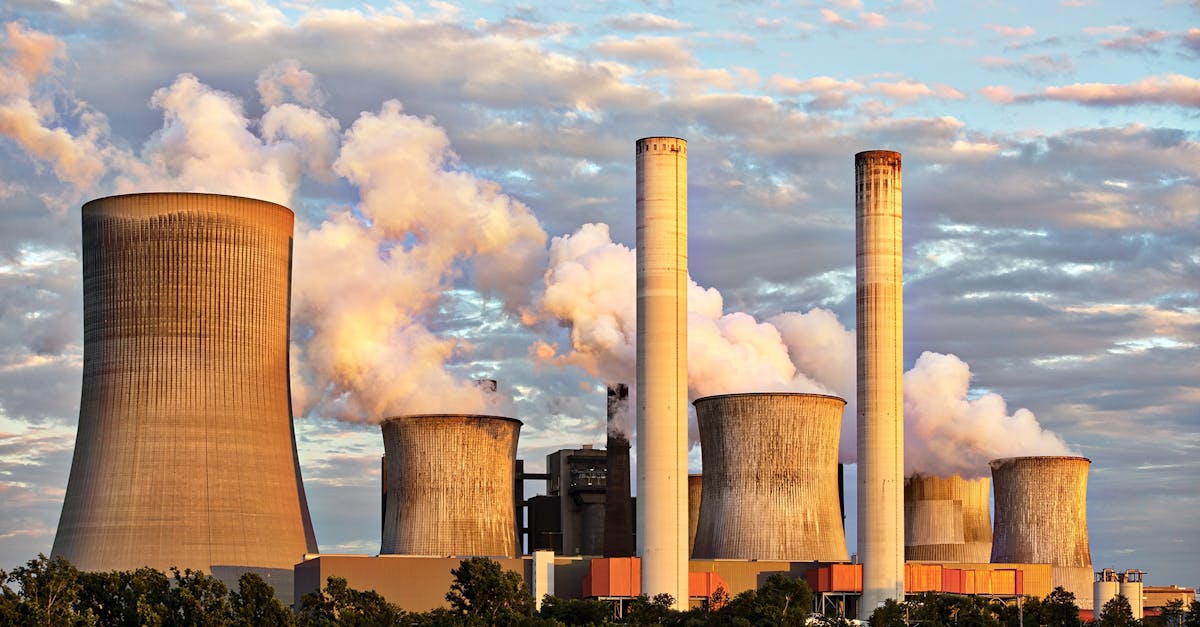
The most pervasive failure happens when a transaction imposes a cost or delivers a benefit to someone who was never part of the deal. As the Concise Encyclopedia of Economics explains, an externality is a cost or benefit that falls on a third party and is not reflected in the market price. A factory that dumps waste into a river sells its product at a price covering its own labor and materials — but not the cleanup, lost fishing, and health costs borne downstream. Because the polluter never pays those costs, the market price is too low and the factory produces too much.
Externalities run both directions. A homeowner who restores a historic facade raises the value of every house on the block but captures none of that gain, so the market under-supplies the activity. The signature of an externality is a gap between private cost (what the decision-maker pays) and social cost (what society pays in total). Wherever those two diverge, the quantity the market lands on is wrong.
2. Public goods — when no one can be charged
Some goods have two awkward properties at once: they are non-excludable (you cannot stop someone from enjoying them) and non-rival (one person's use does not diminish anyone else's). National defense is the textbook case. A missile-defense shield protects every resident of a country whether or not they paid for it, and protecting one more person costs nothing extra. As the encyclopedia entry on public goods notes, this creates the free-rider problem: since you get the benefit regardless, your rational move is to let everyone else pay. When everyone reasons that way, the good is dramatically underfunded or not provided at all.
This is why national defense, basic research, mosquito-abatement programs, and clean air are rarely left to private markets. A profit-seeking firm cannot run a business selling something it cannot withhold from non-payers. The market does not provide too much or too little here — it often provides nothing, and the gap is filled by government, taxation, or collective institutions.
3. Market power — when one seller can move the price
The efficient-market result assumes no single participant can influence the price; each is a "price taker." When one seller (a monopoly) or a handful (an oligopoly) controls enough of the market to set prices, that assumption collapses. A monopolist maximizes profit by producing less than a competitive industry would and charging more — deliberately holding back output so that scarcity props up the price.
The damage is not just that the monopolist gets rich. The lost output represents real value that never gets created: customers who would happily have paid more than it costs to produce the good simply go without. The U.S. organizes an entire body of antitrust law around this failure — the Federal Trade Commission's enforcement of the antitrust statutes exists precisely because concentrated market power reliably produces higher prices and less innovation than competition would.
4. Asymmetric information — when one side knows more
The last failure breaks the full-information assumption. When one party to a transaction knows materially more than the other, markets can unravel. The classic demonstration is economist George Akerlof's "market for lemons": if buyers cannot tell good used cars from defective ones, they will only pay an average price — which drives the sellers of genuinely good cars out of the market, leaving disproportionately bad cars behind, which lowers the price further, and so on. Quality collapses because information is unevenly distributed.
The same dynamic appears in insurance (the person who knows they are sick is the keenest to buy coverage), lending (the borrower knows their own risk better than the bank), and finance (a company knows its own books better than its investors). Much of modern regulation — securities disclosure rules, food-labeling requirements, professional licensing — exists to close information gaps. The Securities and Exchange Commission's mandatory disclosure regime is a direct institutional response to the failure that arises when sellers of stock know more than the people buying it.
Why sorting them matters
The payoff of this taxonomy is diagnostic. Each failure has a characteristic fix, and applying the wrong one wastes money or makes things worse. An externality calls for changing the price the decision-maker faces — a tax on the pollution, a subsidy for the vaccine. A public good usually calls for collective provision because no price can be charged at all. Market power calls for competition policy — breaking up the monopoly, blocking the merger, opening the market to entrants. Asymmetric information calls for forcing the hidden information into the open through disclosure, warranties, certification, or licensing.
Consider how badly these cross-apply. Subsidizing a monopolist does not fix monopoly — it pads the profits of a firm already restricting output. Mandating disclosure does nothing about a factory's river pollution, because the problem there is not that downstream residents lack information; they know they are being poisoned and still cannot make the polluter pay. A pollution tax does nothing for national defense, which no tax on a transaction can fund because there is no transaction to tax.
There is also a humility clause built into the framework. Identifying a market failure establishes only that the unregulated outcome is imperfect — not that any particular government intervention will improve it. Regulators have incomplete information, face their own incentives, and can be captured by the industries they oversee. The honest version of market-failure economics treats the four failures as a list of places to look for genuine problems, then asks separately whether a realistic intervention would actually beat the flawed market. Often it would. Sometimes it would not. The four categories tell you where to investigate; they do not pre-write the answer.
That is the right way to hold this idea. Markets are extraordinary coordination machines, and most of the time the invisible hand earns its reputation. But it has four well-mapped blind spots — costs that land on bystanders, goods no one can be charged for, sellers powerful enough to set prices, and information that only one side holds. When a market is producing an outcome that seems plainly wrong, the productive first question is always: which of the four is this?
◆ Sources
- Externalities — Bryan Caplan, Concise Encyclopedia of Economics, Library of Economics and Liberty
- Public Goods — Tyler Cowen, Concise Encyclopedia of Economics, Library of Economics and Liberty
- The Antitrust Laws — Federal Trade Commission
- The Role of the SEC — Investor.gov, U.S. Securities and Exchange Commission
- Property Rights — Armen A. Alchian, Concise Encyclopedia of Economics, Library of Economics and Liberty