

Skip to content
Scypion Finance
  • Articles
  • The Library
  • Glossary
  • Tools
  • Military
  • Videos
/
Scypion Finance

Data over opinion. Evidence over emotion.

YT𝕏∿

About

  • Company
  • Leadership
  • Contact
  • Editorial Standards

Legal

  • Terms of Use
  • Privacy Policy
  • Cookie Policy
  • Disclaimer

Scypion Finance is for educational and informational purposes only and is not financial, investment, tax, or legal advice. Reading this site does not create an advisory relationship. Markets carry risk; consult a licensed professional before acting on anything you read here.

Accessibility
© 2026 Scypion Finance. Founded by Erajah Scypion.Your money, and the forces that move it.

Photo by Nikita Belokhonov on Pexels

Home›The Economy›Market Failures & Policy›Market Failures

Market Failure: When Markets Produce the Wrong Outcome

Erajah Scypion
Erajah ScypionFounder, Scypion Finance
5 sources3 min readPublished April 17, 2026
◆ Key Takeaways
  • Market failure occurs when the price mechanism fails to produce socially optimal quantities — too much or too little relative to the efficient allocation
  • Four main causes: negative externalities (pollution), positive externalities (education), public goods (national defense), and information asymmetry (insurance markets)
  • Market failure is the economic justification for government intervention — not all intervention, but intervention that corrects a specific market failure
  • Market failure must be weighed against government failure — the risk that intervention produces outcomes worse than the market failure it is meant to correct
On this page
  • In plain terms
  • Why it works this way
  • A real example
  • Why it matters

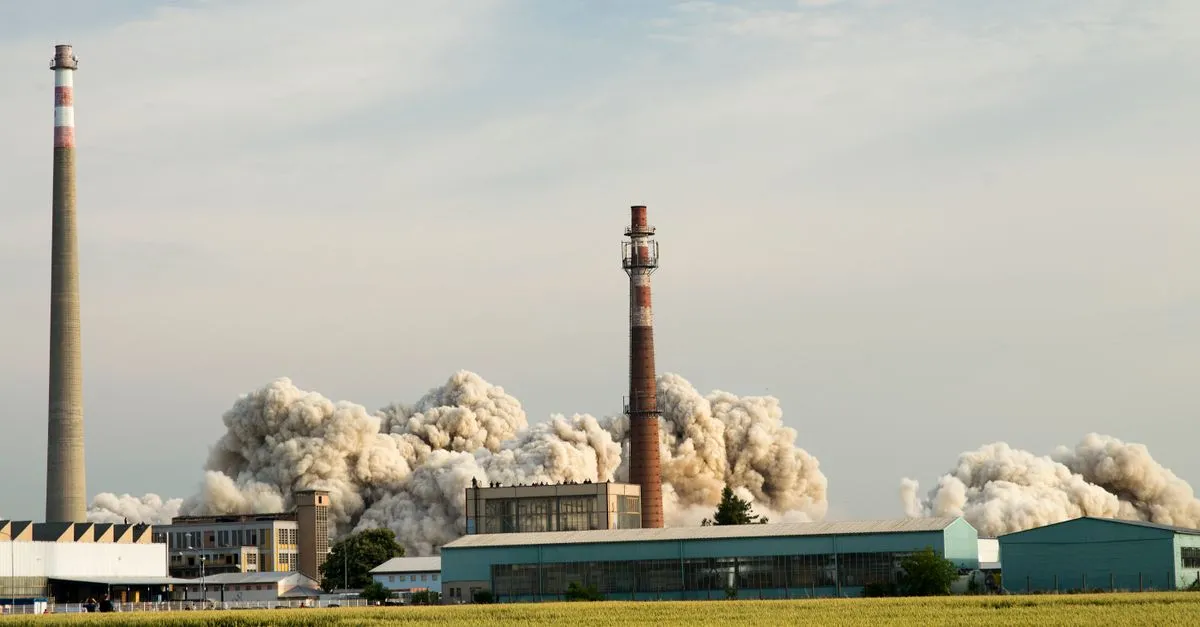
Left to their own devices, steel mills dump pollutants into rivers because the cost is borne by downstream communities, not by the mill or its customers. Neighborhoods underinvest in vaccination because each individual captures only part of the herd immunity benefit. Buyers of used cars know far less about the vehicle's condition than the seller. Bridges, lighthouses, and national defense cannot be profitably provided by private markets. Each of these is a distinct type of market failure — a situation where the price mechanism produces systematically inefficient outcomes — and each has a corresponding policy response.

In plain terms

Market failure occurs when competitive markets do not allocate resources efficiently — when the market equilibrium produces less social welfare than is achievable. It is the condition under which free markets generate outcomes that diverge from the social optimum, creating a potential rationale for intervention.

The four main sources:

Externalities: costs or benefits that fall on parties not involved in the market transaction. A factory's pollution imposes costs on neighbors not reflected in the factory's price. A vaccination confers herd immunity benefits on others not captured in the individual's benefit calculation.

Public goods: goods that are non-excludable (you can't prevent non-payers from using them) and non-rival (one person's use doesn't reduce availability for others). Markets undersupply public goods because free-riding makes private provision unprofitable.

Information asymmetry: one party to a transaction has significantly better information than the other — creating adverse selection, moral hazard, and market thin-ness or collapse.

Market power: monopoly and oligopoly produce less output at higher prices than competitive markets, creating allocative inefficiency and deadweight loss.

Why it works this way

Each type of market failure corrupts the price signal in a different way. Externalities mean prices don't reflect full social costs or benefits. Public goods mean that private returns diverge from social returns. Asymmetric information means prices don't accurately reflect quality or risk. Market power means prices are set above marginal cost.

In all cases, the privately profitable equilibrium diverges from the socially optimal one — quantities are either too high (negative externality goods) or too low (positive externality goods, public goods) relative to the efficient allocation.

The EPA's regulatory impact analyses are formal market failure assessments: each regulation must document the market failure it corrects, estimate the efficiency gain from correction, and compare it against the cost of intervention. This cost-benefit framework is the institutional embodiment of market failure theory in regulatory practice.

A real example

The 2008 financial crisis involved multiple simultaneous market failures: information asymmetry in mortgage-backed securities (sellers knew more about loan quality than buyers); market power in credit rating agencies (three firms dominated, creating concentration without competitive discipline); and negative externalities in systemic risk (individual banks ignored the social cost of their leverage on the overall system). The Federal Reserve's post-crisis regulatory responses — stress testing, capital requirements, resolution planning — are market failure corrections targeting each of these channels.

Why it matters

Market failure is the necessary (but not sufficient) condition for government intervention to be welfare-improving. Without a market failure, competitive markets allocate resources efficiently and intervention reduces welfare. With a market failure, carefully designed intervention can improve outcomes. But government failure — poorly designed intervention that produces worse outcomes than the original market failure — is also real. The decision to intervene requires not just identifying the market failure but evaluating whether the proposed correction is likely to improve on the market outcome.

◆ THE GUIDEThe Best Economics Books for Non-EconomistsThe best economics books for people who never took the class — accessible guides from Wheelan and Sowell, plus Freakonomics and the source texts from Smith and Friedman.See our picks →

◆ Sources

  1. Guidelines for Preparing Economic Analyses — EPA
  2. Supervision and Regulation — Federal Reserve
  3. Market Failure — Investopedia
  4. Market Failure — Library of Economics and Liberty
  5. Congressional Budget Office — Regulatory Analysis
On this page
  • In plain terms
  • Why it works this way
  • A real example
  • Why it matters
◆ Related reading
  • The Coase Theorem: When Private Bargaining Solves What Regulation Can't
  • Public Goods: What Markets Can't Provide on Their Own
  • Subsidy: When Government Picks Up Part of the Tab
  • The Four Types of Goods: Why Excludability and Rivalry Determine How Markets Work
All Market Failures →
◆ SHARE
Erajah Scypion
Erajah Scypion
Founder, Scypion Finance

I got interested in economics the hard way, by not understanding what was happening around me. I'd read an explanation, nod along, and walk away knowing no more than when I started. After enough of that, I stopped looking for the resource I wanted and started writing it. My background isn't Wall Street. I've spent the last eleven years in the U.S. Navy, and that's where I learned the thing this whole site runs on: Any system — a battalion, a budget, an economy — can be understood if someone walks you through it one step at a time. The Navy also gave me the three words I hold the work to: honor, courage, commitment. Here they mean every claim traces back to a source you can check yourself, the clear explanation gets chosen over the easy one, and the reader comes before anyone paying the bills. Scypion Finance is where that work gets published: sourced explanations of money and the economy, written to be understood. Start wherever your question is.

View full profile →

More in Market Failures

All Market Failures →
◆ MARKET FAILURES

Common Resources: Rival But Non-Excludable

A common resource is rival (one person's use reduces availability for others) but non-excludable (no one can be effectively prevented from using it).

3 min read
Read →
◆ MARKET FAILURES

Pigovian Taxes and Subsidies: Putting a Price on What the Market Ignores

A Pigovian tax equals the harm a transaction inflicts on third parties. Here is a carbon-tax worked example, line by line, and where the idea gets tricky.

7 min read
Read →
◆ MARKET FAILURES

Government vs. Market: When Public Provision Makes Sense and When It Doesn't

Markets handle most goods efficiently. But some goods break that logic. Here's how to tell which is which before you take a side.

8 min read
Read →
◆ MARKET FAILURES

Externality: The Cost or Benefit That Markets Forget to Price

An externality is an uncompensated cost or benefit that a market transaction imposes on third parties.

3 min read
Read →

◆ THE NEWSLETTER

Money, made clear

Personal finance and the economy, broken down: numbers shown, every claim sourced.

Only when it's worth your time. No spam, unsubscribe anytime.