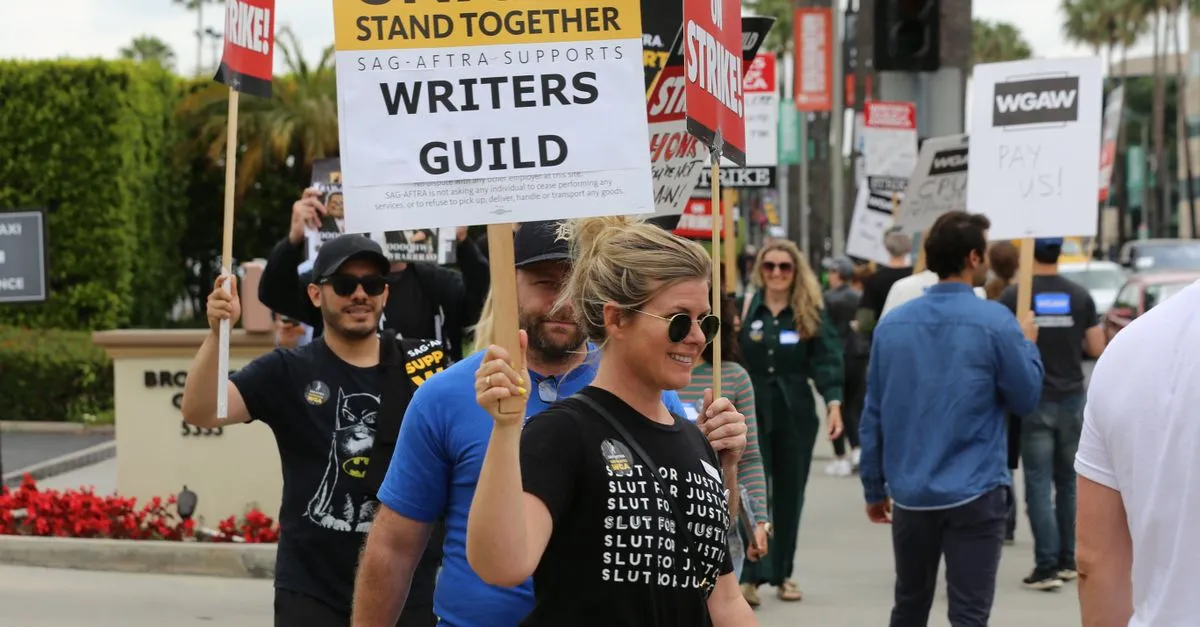

Both the minimum wage and unions raise wages above the market rate, and both involve a real trade-off: workers who keep or gain jobs earn more, while some workers on the margin may lose employment. The size of that trade-off depends on how large the increase is relative to local wages and how much wage-setting power employers already hold.
On this page
Ask whether the minimum wage destroys jobs and you'll get a confident yes from one economist and an equally confident no from another, both pointing to peer-reviewed evidence. That is unusual. On most questions the economics profession converges. On minimum wages and unions it doesn't, and the disagreement is not because one side is ignorant. It is because the answer genuinely depends on the structure of the specific labor market and the size of the specific intervention. Anyone who tells you the economics is settled in either direction is selling a slogan. Here is what is actually known, and where the honest uncertainty lies.
The starting point: both raise wages above the market level
The minimum wage and unions are tools for the same goal: pushing wages above what an unregulated labor market would pay. The minimum wage does it by law; unions do it by collective bargaining, where workers negotiate as a bloc rather than as individuals. Both confront the same fundamental tension: in the simplest economic model, forcing the price of labor above its equilibrium creates a surplus of labor, that is, unemployment.
The federal minimum wage has stood at $7.25 per hour since 2009, the longest stretch without an increase since it was established.5 Many states and cities set higher floors. Union membership, meanwhile, covered 10.0% of wage and salary workers in 20234, down from roughly a third of the workforce at mid-century, and concentrated heavily in the public sector (32.5%) versus the private sector (6.0%).
The case against: the textbook prediction
The standard competitive model is unambiguous, and it deserves a fair hearing. If the market wage for low-skill labor is $10 and the law mandates $15, employers facing a higher labor cost will hire fewer hours: some jobs are automated, some hours are cut, some businesses that were marginal close. The workers who keep their jobs earn more; the workers who lose them, disproportionately the least-skilled and least-experienced, earn nothing. The Library of Economics and Liberty's survey of the minimum wage lays out this logic and notes the long tradition of research finding employment effects, especially among teenagers and the marginally employable.1
This is not a fringe view. It is the prediction of the most basic supply-and-demand reasoning, and dismissing it entirely is as much a mistake as treating it as the whole story.
The case for: monopsony and the empirical surprise
The complication arrived from two directions. First, theory: if employers have monopsony power (wage-setting power because workers lack alternatives) then a minimum wage can actually raise employment over a range, because it forces a wage-suppressing employer to pay closer to what the work is worth. Federal Reserve research on whether the minimum wage can combat employers' labor market power acknowledges this is not just a blackboard possibility; many low-wage labor markets show signs of employer wage-setting power.6
Second, the data. Beginning with David Card and Alan Krueger's famous 1994 study of fast-food employment across the New Jersey–Pennsylvania border after New Jersey raised its minimum wage, a wave of empirical work found employment effects near zero for moderate increases. Card's body of work on this question contributed to his 2021 Nobel Prize. The accumulated evidence now suggests that minimum-wage increases staying within a reasonable range of local wages tend to raise pay for low-wage workers with small or hard-to-detect job losses, while very large increases pushing the floor far above the local median carry more employment risk. The level relative to the local wage is the variable that matters.
Weighing it: what the CBO actually found
The most careful attempt to weigh the trade-off honestly is the Congressional Budget Office's 2019 analysis of raising the federal minimum wage to $15 by 2025.3 Because it is nonpartisan and explicit about uncertainty, it is the best single document for seeing both effects at once rather than just the one your politics prefers.
The CBO's median estimate: a $15 federal minimum would raise wages for 17 million workers directly, lift 1.3 million people out of poverty, and reduce employment by a median of 1.3 million jobs, with a two-thirds-likely range running from roughly zero to about 3.7 million jobs lost. Read honestly, that is not a verdict for either side. It is a redistribution with winners and losers: a large number of low-wage workers get a raise and many families escape poverty, while a smaller-but-real number of workers lose employment, falling hardest on the least-skilled. Whether that trade is worth it is a value judgment the economics can inform but not settle. The data's job is to make the trade-off visible; the choice is political.
What unions do, by the numbers
Unions intervene through a different mechanism but face a parallel reckoning. The clearest documented effect is the union wage premium: union members tend to earn more than comparable non-union workers. BLS data shows union members had median weekly earnings of $1,263 in 2023 versus $1,090 for non-union workers4, and while part of that raw gap reflects differences in occupation and industry, careful estimates of the true premium typically land within 10 to 15%. The Library of Economics and Liberty's overview of labor unions reviews this evidence and notes unions also compress the pay distribution, narrowing gaps between higher- and lower-paid members.2
The trade-offs mirror the minimum wage. By raising members' wages above the competitive level, unions can reduce employment in unionized firms and shift jobs toward the non-union sector, one reason the union wage premium can coexist with declining union membership. Unionized firms may also become less flexible. Against that, proponents point to non-wage benefits: better safety, grievance procedures, and a counterweight to employer monopsony power in exactly the markets where that power is strongest.
A decision framework for reading the debate
When you encounter a confident claim about either policy, run it through three questions the evidence says actually matter.
How big is the intervention relative to the local market? A minimum wage at half the local median behaves very differently from one near or above it. "Minimum wages cost jobs" and "minimum wages don't cost jobs" can both be true at different magnitudes. Always ask: how high, relative to what?
How competitive is the labor market in question? In markets with real employer wage-setting power, a wage floor or a union can raise both pay and employment. In highly competitive markets, the textbook job-loss prediction has more force. The structure determines the sign of the effect.
Who bears the cost, and is that acceptable? Even the optimistic CBO scenario involves some job loss concentrated among the least-skilled, and even the pessimistic one involves millions of raises and a real drop in poverty. There is no version of this policy that is pure benefit or pure harm. The honest question is not "does it work?" but "is this particular distribution of winners and losers worth it?"
That is the uncomfortable, accurate bottom line. The minimum wage and unions are not free lunches, and they are not job-killing disasters. They are redistributive tools whose effects depend on details, magnitude and market structure, that slogans on both sides are designed to ignore. Reading the CBO's own framing of the uncertainty is the fastest cure for false confidence in either direction.
◆ Frequently Asked Questions
Does raising the minimum wage always cause job losses?
What did the CBO actually find when it analyzed a $15 federal minimum wage?
How much more do union members earn compared to non-union workers?
Why has union membership fallen so sharply since mid-century?
◆ Sources
- Minimum Wages — Linda Gorman, Concise Encyclopedia of Economics, Library of Economics and Liberty
- Labor Unions — Morgan O. Reynolds, Concise Encyclopedia of Economics, Library of Economics and Liberty
- The Effects on Employment and Family Income of Increasing the Federal Minimum Wage — Congressional Budget Office
- Union Members — 2023 (news release) — Bureau of Labor Statistics
- Minimum Wage — U.S. Department of Labor (Wage and Hour Division)
- Can the Minimum Wage Combat Employers' Labor Market Power? — Federal Reserve Bank of Minneapolis