
Skip to content
Scypion Finance
  • Articles
  • The Library
  • Glossary
  • Tools
  • Military
  • Videos
/
Scypion Finance

Data over opinion. Evidence over emotion.

YT𝕏∿

About

  • Company
  • Leadership
  • Contact
  • Editorial Standards

Legal

  • Terms of Use
  • Privacy Policy
  • Cookie Policy
  • Disclaimer

Scypion Finance is for educational and informational purposes only and is not financial, investment, tax, or legal advice. Reading this site does not create an advisory relationship. Markets carry risk; consult a licensed professional before acting on anything you read here.

Accessibility
© 2026 Scypion Finance. Founded by Erajah Scypion.Your money, and the forces that move it.

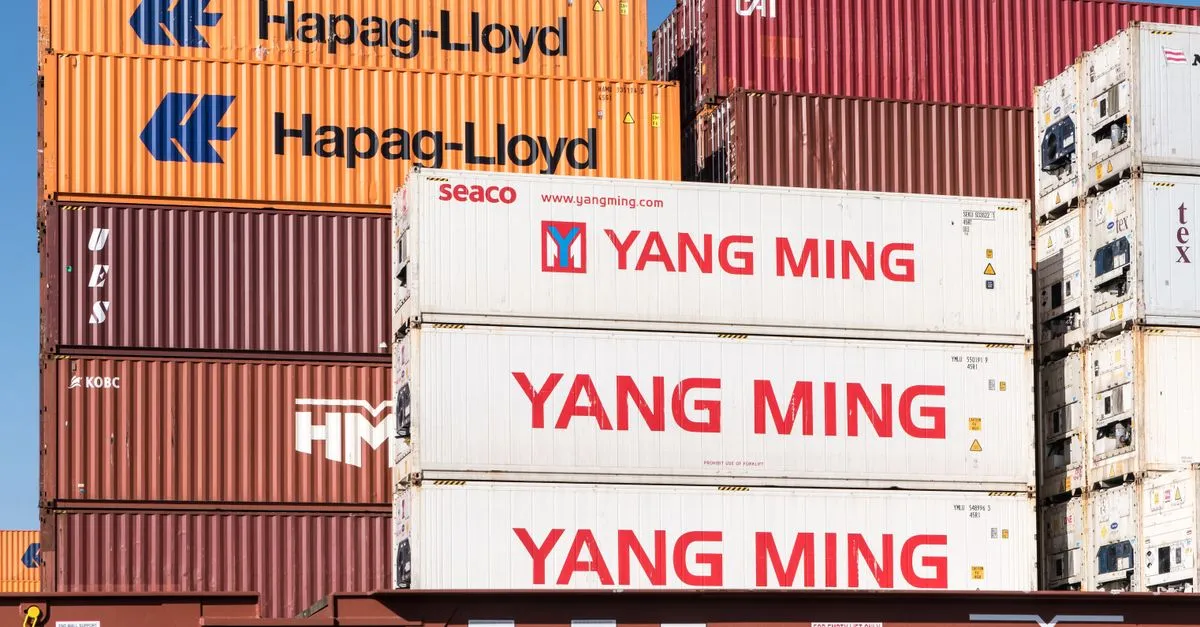
Photo by Wolfgang Weiser on Pexels

Home›The Economy›Global & Applied›International Trade

Dumping: When Exporters Price Below Cost to Capture Markets

Erajah Scypion
Erajah ScypionFounder, Scypion Finance
5 sources3 min readPublished May 27, 2026
◆ Key Takeaways
  • Dumping is selling exports below normal value — either below the home market price or below production cost
  • It may be predatory (driving out competitors to establish monopoly) or may reflect excess capacity, price discrimination, or government subsidies
  • Anti-dumping duties counteract the price advantage by adding a tariff equal to the dumping margin
  • Dumping can harm domestic import-competing industries but benefit domestic consumers of the dumped good — the policy debate reflects this distributional tension
On this page
  • In plain terms
  • Why it works this way
  • A real example
  • Why it matters

In the 2000s, Chinese solar panel manufacturers sold panels in the U.S. and Europe at prices that U.S. and European manufacturers claimed were below production cost — enabled by substantial Chinese government subsidies to the solar industry. Western manufacturers argued this constituted dumping: artificially low prices that, if sustained, would drive domestic producers out of the market and establish Chinese dominance in a strategically important clean energy sector. The U.S. and EU imposed anti-dumping duties to offset the price advantage. The debate over whether this protected legitimate domestic industry or preserved inefficient incumbents at consumer expense is a compressed version of the dumping policy debate writ large.

In plain terms

Dumping occurs when a foreign producer sells goods in an export market at a price below "normal value" — defined as either:

  1. The price charged in the exporting firm's home market (international price discrimination)
  2. The cost of production plus a reasonable profit margin (below-cost pricing)

The World Trade Organization's Anti-Dumping Agreement establishes that dumping is not automatically illegal — it is only actionable when it causes or threatens material injury to domestic industries in the importing country. When both conditions are met (dumping margin + material injury), importing countries can impose anti-dumping duties up to the size of the dumping margin.

Why it works this way

Dumping can arise from several distinct mechanisms:

Predatory pricing: a foreign firm prices below cost to drive out domestic competitors, with the intent to raise prices once competition is eliminated. This is the most harmful form, analogous to domestic predatory pricing prohibited by antitrust law.

Price discrimination: the exporting firm charges different prices in different markets, pricing higher at home (where it has market power) and lower in export markets (where competition is more intense). This is the most common form — rational third-degree price discrimination, not necessarily predatory.

Government subsidy: below-market pricing is enabled by export subsidies that reduce the firm's effective cost — an indirect government subsidy to foreign consumers at domestic taxpayer expense.

The U.S. International Trade Commission investigates anti-dumping petitions filed by domestic industries. The Department of Commerce calculates the dumping margin; the USITC determines injury. If both find affirmatively, anti-dumping duties are imposed.

A real example

Steel is the most frequently dumped product in U.S. trade law. The USITC's steel trade remedies database shows dozens of active anti-dumping orders against steel products from China, South Korea, India, and other major producers — reflecting persistent allegations of below-cost pricing enabled by excess capacity and state subsidies in foreign steel industries.

Why it matters

Dumping policy involves genuine tensions. Anti-dumping duties protect domestic import-competing industries and their workers, but they raise prices for downstream industries and consumers who benefit from lower-cost imports. Predatory dumping (if it actually occurs) creates long-run competition concerns; price-discrimination dumping creates short-run consumer benefits. The policy response should distinguish between the two — a distinction that anti-dumping proceedings do not always make cleanly.


◆ THE GUIDEThe Best Economics Books for Non-EconomistsThe best economics books for people who never took the class — accessible guides from Wheelan and Sowell, plus Freakonomics and the source texts from Smith and Friedman.See our picks →

◆ Sources

  1. Anti-Dumping Agreement — World Trade Organization
  2. U.S. International Trade Commission
  3. International Trade Administration — U.S. Department of Commerce
  4. Dumping — Investopedia
  5. International Trade — Library of Economics and Liberty
On this page
  • In plain terms
  • Why it works this way
  • A real example
  • Why it matters
◆ Related reading
  • The Hidden Tax: How Quotas and Non-Tariff Barriers Really Work
  • Terms of Trade: The Exchange Rate Between Exports and Imports
  • Absolute vs. Comparative Advantage: The Distinction That Explains Trade
  • Comparative Advantage: The Principle Behind Every Trade Relationship on Earth
All International Trade →
◆ SHARE
Erajah Scypion
Erajah Scypion
Founder, Scypion Finance

I got interested in economics the hard way, by not understanding what was happening around me. I'd read an explanation, nod along, and walk away knowing no more than when I started. After enough of that, I stopped looking for the resource I wanted and started writing it. My background isn't Wall Street. I've spent the last eleven years in the U.S. Navy, and that's where I learned the thing this whole site runs on: Any system — a battalion, a budget, an economy — can be understood if someone walks you through it one step at a time. The Navy also gave me the three words I hold the work to: honor, courage, commitment. Here they mean every claim traces back to a source you can check yourself, the clear explanation gets chosen over the easy one, and the reader comes before anyone paying the bills. Scypion Finance is where that work gets published: sourced explanations of money and the economy, written to be understood. Start wherever your question is.

View full profile →

More in International Trade

All International Trade →
◆ INTERNATIONAL TRADE

Trade Doesn't Cost Jobs — It Moves Them. Here's the Evidence.

The idea that imports destroy jobs and trade is zero-sum is intuitive, persistent, and wrong in the aggregate — but the real story is more honest than either…

10 min read
Read →
◆ INTERNATIONAL TRADE

Trade Policy, Jobs, and the Political Economy of Protection

Economists agree free trade grows the pie. Why is protection so popular? Gains are spread thin, losses concentrated, and politics rewards the loud.

7 min read
Read →
◆ INTERNATIONAL TRADE

Tariff: The Tax That Makes Imports More Expensive

A tariff is a tax on imported goods. It raises import prices, protects domestic producers, generates government revenue — and reduces total welfare by…

3 min read
Read →
◆ INTERNATIONAL TRADE

Trade Surplus and Trade Deficit: What They Mean and What They Don't

A trade surplus means a country exports more than it imports; a deficit means it imports more than it exports.

3 min read
Read →

◆ THE NEWSLETTER

Money, made clear

Personal finance and the economy, broken down: numbers shown, every claim sourced.

Only when it's worth your time. No spam, unsubscribe anytime.