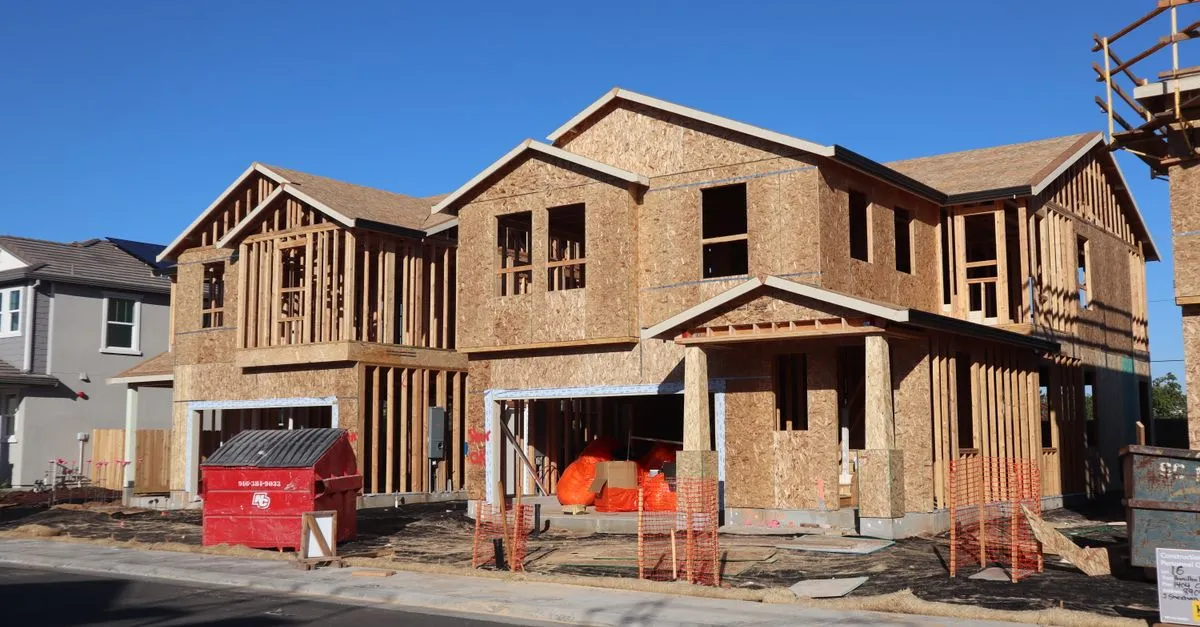

Real estate builds wealth through three simultaneous returns: property appreciation, mortgage principal paydown (forced savings), and rental cash flow. Leverage amplifies those gains: a 5% appreciation on a property bought with 20% down becomes a 25% return on your capital, something cash stock purchases cannot match.
On this page
- The Three Sources of Real Estate Returns
- The Leverage Multiplier
- Principal Paydown: Wealth Building Without Thinking
- Tax Deductions: The Hidden Wealth Builder
- A Worked Example: Real Estate vs. Stocks
- Why Not Everyone Uses Real Estate
- The Math on Real Estate Success
- Action Items: Should You Invest in Real Estate?
The Three Sources of Real Estate Returns
When you invest in real estate, you're not just betting on price appreciation. You're getting three income streams simultaneously:
1. Appreciation (price increases) The property value rises over time. A $400,000 property appreciating 3% annually becomes $412,000 in year one.1
2. Principal paydown (forced savings) Each mortgage payment reduces your debt. On a $320,000 mortgage at 6%, your first year principal paydown is approximately $6,600. The bank is forcing you to save.
3. Cash flow (rent minus expenses) You collect rent ($2,400/month on a $400,000 property) and pay expenses ($800/month: taxes, insurance, maintenance, vacancy). Net cash flow: $1,600/month or $19,200/year.
Together, these three sources create wealth in ways that stocks alone cannot replicate.
The Leverage Multiplier
Real estate's primary advantage is leverage. You can borrow 80% of the purchase price.
Example: Real estate with leverage
- Property price: $400,000
- Your down payment: $80,000 (20%)
- Borrowed: $320,000 (80%)
- Property appreciates 5% in year one: $400,000 to $420,000
- Your $80,000 down payment is now worth $100,000
- Your return: $20,000 / $80,000 = 25% annual return
You put in $80,000, and a 5% property move became a 25% return on your capital. That's leverage.
Compare to stocks:
- You buy $100,000 in stocks
- Stocks appreciate 5%: $100,000 to $105,000
- Your return: $5,000 / $100,000 = 5% annual return
The 5% appreciation is identical, but real estate's leverage turned it into 25%, while stocks remained 5%.5
Why can't you leverage stocks the same way?
You can (margin loans), but it's more expensive (costs 7 to 10% annually), riskier (can be called anytime), and less stable. Real estate mortgages are cheap (4 to 7% fixed for 30 years), long-term, and don't get called in downturns.
This is real estate's hidden advantage: cheap, stable, long-term leverage.
Principal Paydown: Wealth Building Without Thinking
Every mortgage payment includes principal and interest.
$320,000 mortgage at 6% for 30 years:
- Monthly payment: $1,919
- First payment breakdown: $1,600 interest + $319 principal
- Year 10 payment breakdown: $1,480 interest + $439 principal
- Year 20 payment breakdown: $1,200 interest + $719 principal
- Year 30 payment breakdown: $75 interest + $1,844 principal
Over 30 years, you pay $690,840 total ($1,919 x 360 months). Of that:
- Interest: $370,840
- Principal: $320,000
Principal paydown is forced savings.3 While you're sleeping, each mortgage payment reduces your debt by a small amount. By year 30, you own the $400,000 property free and clear.
Contrary to intuition, principal paydown doesn't require sacrifice. It happens automatically with your regular mortgage payment.
Tax Deductions: The Hidden Wealth Builder
Real estate has tax advantages that stocks don't have.
Annual deductions on a $400,000 rental property:
Mortgage interest: On a new $320,000 mortgage at 6%, year one interest is approximately $19,200. This is 100% tax-deductible. If you're in the 24% tax bracket, this saves $4,608 in taxes.
Depreciation: The IRS lets you deduct the building's cost (not land) over 27.5 years as it "wears out."2 A $400,000 property might be 80% building, 20% land. Depreciation: ($400,000 x 0.8) / 27.5 = $11,636/year. At 24% bracket, this saves $2,792 in taxes.
Operating expenses: Maintenance, repairs, property management, utilities, insurance, and property taxes are all deductible. On a $400,000 property, annual operating expenses might be $6,000 to $8,000, saving $1,440 to $1,920 in taxes.
Total tax deductions (year 1): $19,200 (interest) + $11,636 (depreciation) + $7,000 (expenses) = $37,836
If you earned $19,200 in rental income, you'd normally owe tax on that. But with $37,836 in deductions, you actually have a $18,636 tax loss. The IRS allows you to deduct this against other income (up to $25,000/year if you're not a real estate professional), or carry it forward.
Result: You collect $19,200 in rent, pay $12,000 in actual expenses (taxes, insurance, maintenance), pocket $7,200 in cash, and claim a $18,636 tax loss.
Your taxable income is reduced, your cash increases. This is the miracle of depreciation.
Note: This tax benefit expires when you sell (depreciation recapture), but it defers taxes for decades.
A Worked Example: Real Estate vs. Stocks
Scenario: You have $80,000 to invest. Compare real estate and stocks over 10 years.
Option A: Real estate (with leverage)
- Property price: $400,000
- Your down payment: $80,000
- Mortgage: $320,000 at 6% for 30 years
- Monthly mortgage payment: $1,919
- Monthly rent: $2,400
- Monthly expenses (taxes, insurance, maintenance): $800
- Net monthly cash flow: $2,400 minus $1,919 minus $800 = negative $319/month (you pay $319/month)
Wait, negative cash flow? This property doesn't cash flow initially. But let's see what happens over 10 years.
Year 10 position:
- Property appreciation (3% annually): $400,000 to $536,0004
- Mortgage paid down: From $320,000 to $278,000 (approx)
- Your equity: $536,000 minus $278,000 = $258,000
- Your initial investment: $80,000
- Gain: $178,000
- Return: $178,000 / $80,000 = 222% over 10 years (12.8% annually)
But that doesn't include tax savings. Over 10 years, depreciation and interest deductions sheltered approximately $100,000 in income (saving $24,000 in taxes). This more than offset the negative cash flow.
True gain: $178,000 + $24,000 = $202,000 on $80,000 invested = 252.5% over 10 years (14.5% annually)
Option B: Stocks (with no leverage)
- Investment: $80,000 in S&P 500 index
- Annual return: 10% average
- Year 10 value: $80,000 x (1.10)^10 = $207,589
- Gain: $127,589
- Return: $127,589 / $80,000 = 159.5% over 10 years (9.9% annually)
- Taxes on dividends/gains: 20% x $127,589 = $25,518 (taxes owed)
- After-tax return: $102,071 / $80,000 = 127.6% (7.9% annually)
Comparison (after-tax, after-expense):
- Real estate: 14.5% annually
- Stocks: 7.9% annually
- Real estate advantage: 6.6% annually
Over 10 years, that compounds into nearly $75,000 more wealth from real estate. This is why real estate investors build more wealth than stock-only investors with the same starting capital.
Why Not Everyone Uses Real Estate
If real estate is so powerful, why doesn't everyone do it?
1. Illiquidity: Real estate takes 3 to 6 months to sell. Stocks sell in 1 second.
2. Effort: You must manage the property, find tenants, handle repairs, or hire a property manager (costs 8 to 12% of rent).
3. Capital: You need 20% down ($80,000 for a $400,000 property). Most people don't have that.
4. Risk: A tenant can destroy the property or stop paying rent. You can lose more than your down payment in a lawsuit. Stocks have limited downside (can't go below zero, but you lose your investment).
5. Complexity: Tax law, tenant screening, maintenance, property management: it's complex.
6. Leverage risk: If the property value drops 20% in a recession, your $80,000 down payment is wiped out. Leverage amplifies losses too.
Real estate isn't for everyone. But for those who can handle the complexity, illiquidity, and effort, it builds wealth faster than stocks.
The Math on Real Estate Success
To make money in real estate, you need:
1. Positive cash flow (or acceptable negative cash flow) Rent must exceed your mortgage + expenses, or at least be close. A $2,400 rent property with $1,919 mortgage + $800 expenses is "neutral," relying on appreciation and tax benefits. Most real estate investors accept this in growing markets.
2. Local appreciation (3%+ annually) If your area's real estate appreciates slower than inflation, real estate is a bad investment. If it appreciates faster, it's great.
3. Long holding period (10+ years) Short-term (1 to 5 years), real estate can underperform due to transaction costs (10% to buy and sell). Long-term (10+ years), transaction costs matter less, and compound appreciation + principal paydown + tax savings dominate.
4. Leverage discipline Don't over-leverage (80% mortgage is typical; 90%+ is risky). Don't over-extend trying to buy too many properties. Leverage amplifies returns but also losses.
Action Items: Should You Invest in Real Estate?
- Do you have 20% down payment saved? (If not, save first)
- Do you have 3 to 6 months living expenses in emergency fund? (If not, build first)
- Are you comfortable managing a property or hiring a manager? (This is crucial)
- Is your local real estate market appreciating? (Check Zillow trends for your area)
- Can you accept illiquidity? (Money is locked up for 10+ years)
- Do you have positive cash flow or acceptable negative cash flow? (Run the numbers)
If yes to all, real estate can build wealth faster than stocks. If no to any, start with stocks and REITs first.
Real estate isn't superior to stocks universally. But for the right person, in the right market, with the right approach, real estate builds wealth through leverage, tax efficiency, and forced savings in ways stocks cannot match.