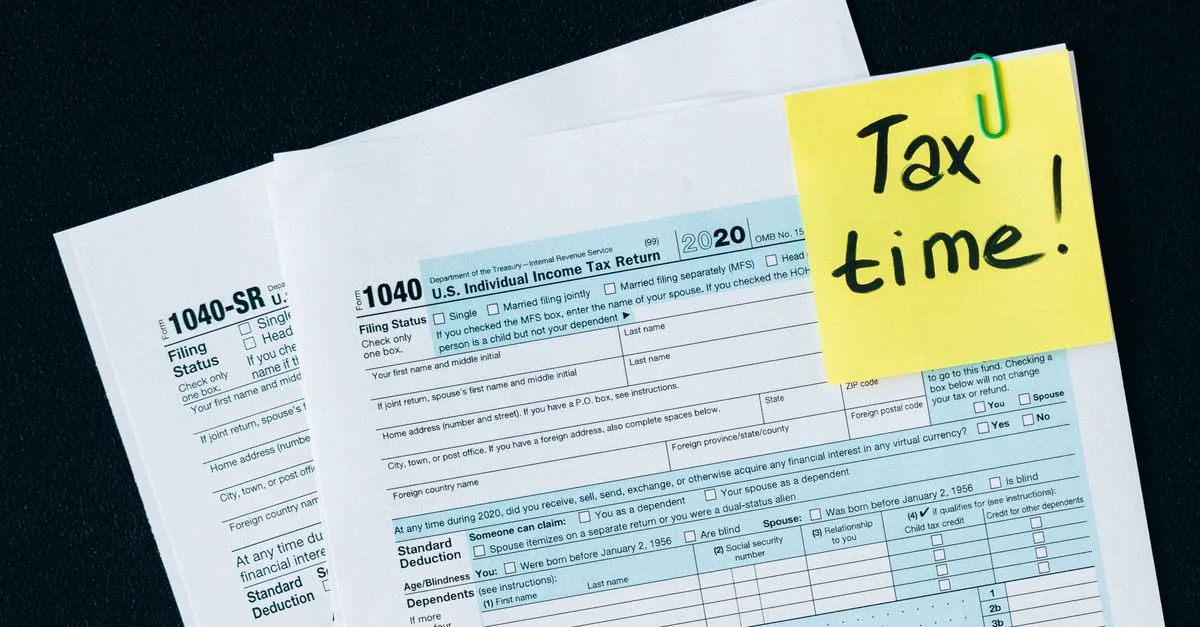

U.S. federal income tax uses progressive brackets: only income within each band is taxed at that band's rate. A raise never reduces take-home pay. Your refund is your own overpaid money returned interest-free. Deductions lower taxable income before any bracket math applies, making your effective rate much lower than your marginal rate.
On this page
Why This Matters
Few financial topics produce more confusion per square inch than income taxes. People make real decisions (declining raises, avoiding additional income, deferring investments) based on misconceptions about how the tax system works. Some of these misconceptions cost hundreds or thousands of dollars per year.
The most damaging one: the widespread belief that crossing into a higher tax bracket makes you worse off: that you can earn a raise and take home less money because "the taxes go up."
This is not how U.S. income tax works. Not even slightly.
Understanding the actual mechanics of the tax system (how brackets function, what marginal and effective rates mean, how deductions reduce your bill, and what a refund actually represents) changes the decisions you make about income, investments, and tax planning. The system is genuinely not as punishing as it appears to most people, once you see how it actually operates.
1. The Marginal Tax Bracket System
The United States federal income tax uses a progressive bracket system. Income is divided into bands, and each band is taxed at a progressively higher rate. The key word: each band. Not all income.
The 2024 federal tax brackets for a single filer:1
| Income Range | Tax Rate |
|---|---|
| $0 – $11,600 | 10% |
| $11,601 – $47,150 | 12% |
| $47,151 – $100,525 | 22% |
| $100,526 – $191,950 | 24% |
| $191,951 – $243,725 | 32% |
| $243,726 – $609,350 | 35% |
| Over $609,350 | 37% |
If you earn $80,000 as a single filer, you do not pay 22% on the entire $80,000. The tax is calculated as follows:
- 10% on the first $11,600: $1,160
- 12% on the next $35,550 (from $11,601 to $47,150): $4,266
- 22% on the remaining $32,850 (from $47,151 to $80,000): $7,227
Total federal income tax before deductions: approximately $12,653.
That is not 22% of $80,000 ($17,600). It's $12,653, because only the income above $47,150 was taxed at 22%. Every dollar earned below that threshold continues to be taxed at its original rate, regardless of how high total income goes.
2. Marginal Rate vs. Effective Rate
Two rates matter, and confusing them is the root of most tax misunderstanding.
Your marginal tax rate is the rate that applies to your last (highest) dollar of income, specifically the top bracket you reach. For the $80,000 earner above, the marginal rate is 22%.2 This is the rate used to calculate the benefit of tax deductions: a $1,000 deduction saves $220 in federal income tax for a 22% marginal rate taxpayer.
Your effective tax rate is total federal income tax paid divided by total income. For the $80,000 earner paying roughly $12,653: effective rate = $12,653 ÷ $80,000 = approximately 15.8%.
Most people who say they're "in the 22% bracket" are actually paying 15–16% of their total income in federal income tax. The marginal rate sounds alarming; the effective rate reveals what's actually happening. The progressive structure means that even high earners don't pay their top rate on everything.
This distinction matters for financial decisions. When you're evaluating a pre-tax retirement contribution (money that reduces your taxable income), you save tax at the marginal rate, not the effective rate. A $5,000 Traditional 401(k) contribution by a 22% bracket taxpayer saves $1,100 in federal income tax. That's the savings on the last dollars earned, which were taxed at 22%.
3. The Raise Myth: Definitively Resolved
The belief that a raise can reduce your take-home pay by pushing you into a higher bracket is false. Here is why:
Say you currently earn $47,000 and receive a $5,000 raise to $52,000. Your income has crossed from the 12% bracket into the 22% bracket.1 Your coworker warns you that most of the raise will go to taxes.
Here's what actually happens: Only the $4,850 above $47,150 is taxed at 22%, which comes to $1,067 in federal income tax on the raise amount. The remaining $150 of the raise (the portion still in the 12% bracket) is taxed at 12%, adding $18. Total additional federal income tax on your $5,000 raise: approximately $1,085.
You took home approximately $3,915 of that raise after federal income tax. Add back state income tax (varies by state), and you still net a positive number. Always. A raise never results in lower take-home pay. Every dollar of additional income always produces more after-tax income, regardless of which bracket it crosses into.
The coworker who advised declining the raise cost the hypothetical employee thousands of dollars per year, permanently, based on a misunderstanding of how the system works.
4. The Standard Deduction
Before bracket math is applied, income is reduced by either the standard deduction or itemized deductions, whichever is larger. This reduction determines your taxable income, which is what the bracket rates actually apply to.
The 2024 standard deduction:1
- $14,600 for single filers
- $29,200 for married filing jointly
- $21,900 for head of household
The vast majority of Americans take the standard deduction, roughly 87% of all filers.2 To itemize, you'd need deductible expenses that exceed the standard deduction: mortgage interest, significant charitable contributions, state and local taxes (capped at $10,000), and qualifying medical expenses.
What this means for the $80,000 single filer: taxable income is $80,000 − $14,600 = $65,400. Not $80,000: $65,400. The bracket calculation runs on $65,400. This is why the effective tax rate on $80,000 is closer to 15% than 22%.
This also illustrates the value of tax-advantaged account contributions. A $5,000 Traditional 401(k) contribution reduces taxable income to $60,400, saving that taxpayer $1,100 in federal income tax while simultaneously building retirement wealth. The standard deduction and pre-tax contributions together are why high earners' effective tax rates are substantially lower than their marginal rates suggest.
5. Why Your Refund Is Not Free Money
Every year, approximately 75% of American taxpayers receive a federal tax refund. The average refund is around $2,800. Most people feel good about this.
They shouldn't, or at least they should understand what it actually represents.
A tax refund means you overpaid your taxes throughout the year. The IRS withheld more from your paychecks than your actual tax liability.3 The refund is the government returning your own money, which sat with the federal government for months earning no interest while you could have had it in your bank account.
An average $2,800 refund represents roughly $233 per month in excess withholding. $233 per month that could have been automatically invested, applied to debt, or kept as a month-by-month financial cushion. Instead, it was an interest-free loan to the federal government.
The refund feels like a windfall because most people receive it as a lump sum in February or March. It doesn't feel like it was ever yours, but it was, all year, in $233 monthly increments you never saw.
The adjustment: file a new W-4 with your employer to reduce withholding so that it more closely matches your actual tax liability.4 More money in each paycheck, no change in annual tax owed, no April refund as compensation. The IRS W-4 estimator at irs.gov/individuals/tax-withholding-estimator helps you calculate the right withholding adjustment.
6. FICA: The Tax That Never Gets Mentioned
Federal income tax is the most visible part of your tax bill, but it's not the only federal tax on earned income. FICA taxes (Federal Insurance Contributions Act) are separate:5
- Social Security: 6.2% on wages up to $168,600 (2024 limit; indexed annually)
- Medicare: 1.45% on all wages, plus an additional 0.9% on wages over $200,000
These are withheld from every paycheck on the gross wage amount, separate from income tax withholding, before any bracket or deduction math applies. Your employer matches these contributions, so the actual Social Security and Medicare contribution rate is 12.4% and 2.9% respectively from the combined employee-employer perspective.
For most workers, FICA taxes represent a fixed, predictable cost of earned income. They don't have brackets, deductions, or credits (with limited exceptions). They're worth understanding because they explain why take-home pay feels lower than people expect from the income tax brackets alone, because the effective total federal tax burden includes FICA.
How These Ideas Connect
Federal income tax is a system with multiple interconnected levers. Understanding how they work together reveals actual opportunities to reduce your tax bill legally.
Pre-tax retirement contributions (Traditional 401(k), Traditional IRA) reduce taxable income dollar-for-dollar. Every dollar contributed saves tax at your marginal rate. A 22% bracket taxpayer saving $10,000 pre-tax reduces federal income tax by $2,200 in the current year while building retirement wealth simultaneously.
Health Savings Accounts (HSAs) provide a triple tax advantage: contributions are pre-tax, growth is tax-free, and qualified medical withdrawals are tax-free. For anyone enrolled in a high-deductible health plan, maximizing HSA contributions is one of the most efficient tax-reduction strategies available.
Tax-loss harvesting in taxable investment accounts (selling investments at a loss to offset capital gains) can reduce the capital gains tax owed on profitable investments. This is more relevant once you have significant taxable investments, but worth understanding as portfolio size grows.
The theme: the tax system creates specific incentives through favorable treatment of retirement contributions, health savings, and certain other behaviors. Using these incentives isn't tax evasion: it's exactly what they were designed for.
What to Learn Next
The IRS provides free tax information at irs.gov, including updated tax brackets, contribution limits, and the W-4 withholding estimator. The IRS also offers Free File (free tax software for individuals with income under $89,000) at irs.gov/freefile.6
The Tax Foundation at taxfoundation.org publishes annual analysis of tax brackets, effective rates across income levels, and state-by-state tax comparisons.2 Their data is particularly useful for understanding how federal and state taxes combine.
The Bogleheads tax-efficient investing guide at bogleheads.org covers how to manage investments to minimize tax drag, meaning the reduction in returns caused by annual capital gains and dividend taxes.
Keep what you can control
Taxes and fees are the two drags on returns you can actually do something about. John C. Bogle built Vanguard and the index fund on minimizing the second, using the same control-what-you-can logic that applies to the first.