On this page
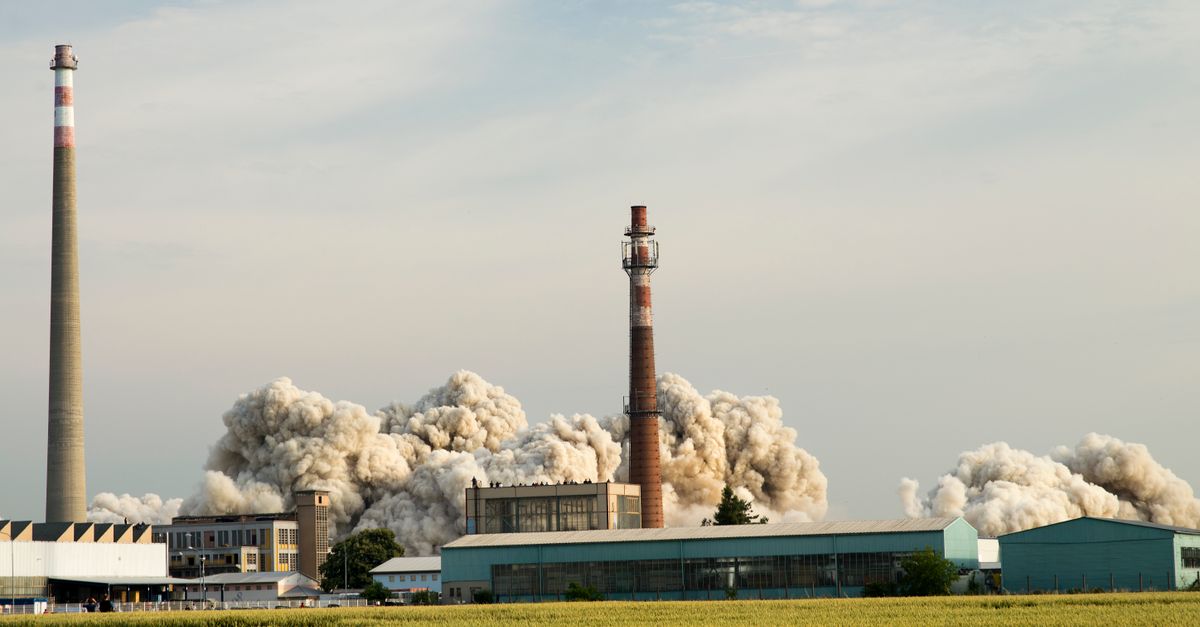
In 1960, an economist named Ronald Coase published a paper that began with a question almost no one was asking. When a factory's smoke damages a nearby laundry, everyone assumes the factory is the problem and the obvious fix is to make it stop. Coase refused the assumption. The harm, he insisted, is reciprocal: to spare the laundry, you must harm the factory by forcing it to cut production. The real economic question is not "how do we punish the polluter?" but "which use of these resources is more valuable, and how do we get there at the lowest cost?" That reframing won him the 1991 Nobel Prize in Economic Sciences, and it produced one of the most cited — and most misunderstood — ideas in all of economics.
The Coase theorem is best treated as a mental model: a lens for thinking about externalities that yields a surprising prediction in its ideal form and an even more useful insight when that ideal breaks down.
The core idea
Coase's claim, stripped to its essentials, is this: if property rights are clearly defined and people can bargain at no cost, they will negotiate their way to the efficient outcome on their own — and they will reach that same efficient outcome no matter who was initially given the right. The government does not need to calculate the right tax or dictate the right quantity. It needs only to assign a clear, enforceable property right and let the parties trade.
The striking half of that claim is the part about "no matter who holds the right." Most people's intuition says the outcome should depend entirely on whether the factory has a right to pollute or the laundry has a right to clean air. Coase showed that under his assumptions, the assignment determines who pays whom — a pure question of wealth and fairness — but not what ultimately gets produced. The efficient activity happens either way. This rests directly on the economics of property rights: once a right is clearly owned, it can be bought and sold, and it will flow to whoever values it most.
A worked bargaining example
Make it concrete with two neighbors. A cattle rancher's herd occasionally strays onto an adjoining farmer's land and tramples crops. Each additional steer the rancher keeps adds $60 to the rancher's profit but causes $100 of crop damage to the farmer. Society is clearly better off if that marginal steer is not kept: it creates $60 of value while destroying $100. The efficient outcome is for the rancher to give up that steer.
Now watch what happens under two opposite legal regimes.
Case 1: The farmer holds the right (the rancher is liable for crop damage). The rancher must compensate the farmer $100 for the damage that extra steer causes, but the steer only earns the rancher $60. The rancher will not keep it — paying $100 to earn $60 is a losing trade. The steer is dropped. Efficient outcome.
Case 2: The rancher holds the right (free to let cattle roam, no liability). Now the farmer, who stands to lose $100 of crops, can offer the rancher money to give up the steer. The farmer is willing to pay anything up to $100 to avoid the damage; the rancher is willing to give up the steer for anything above $60. So they strike a deal somewhere between $60 and $100 — say the farmer pays the rancher $80 to forgo that steer. The rancher pockets $80 (better than the $60 from keeping the steer), the farmer avoids $100 of damage for an $80 payment, and the steer is dropped. Same efficient outcome.
The steer disappears in both cases. What changes is only the direction of the money: in Case 1 the rancher bears the cost, in Case 2 the farmer pays to avoid it. The allocation of resources — how many cattle, how much crop — is identical regardless of who started with the right. That is the Coase theorem in action, and it is genuinely counterintuitive the first time you see it: the law decides who is richer, but the market decides what gets produced.
Why this matters for how we think about externalities
The theorem reframes the entire externality problem. The conventional view treats an externality as a defect that demands government correction — a tax, a quota, a rule. Coase showed that in principle, a market in the right to impose or avoid the harm can solve it without any of that, provided the right is clearly defined and tradable. This is the intellectual engine behind cap-and-trade systems: rather than dictating each plant's emissions, the government creates a tradable property right to emit and lets firms buy and sell it. The right flows to whoever values it most, and the cleanup happens at the lowest total cost — Coasean bargaining at industrial scale. The EPA's sulfur-dioxide allowance trading under the Acid Rain Program is exactly this idea made real: define a property right to pollute, cap the total, and let trading allocate it efficiently.
Where it breaks down
Here is the part casual summaries miss, and it is the most important part. Coase did not believe that private bargaining usually solves externalities. He believed almost the opposite. His entire point in raising the costless-bargaining scenario was to show that the scenario is unrealistic — and that the reasons it is unrealistic are what make institutions, law, and sometimes regulation necessary. The theorem is a thought experiment whose failure is the lesson.
The decisive obstacle is transaction costs — the real costs of identifying the relevant parties, negotiating, writing and enforcing agreements, and preventing holdouts. The rancher and the farmer can bargain because there are two of them and the harm is obvious. Now return to the factory poisoning a river used by 50,000 downstream residents. For Coasean bargaining to work, those 50,000 would have to find each other, agree on how much they are collectively harmed, divide the cost of a payment among themselves, and negotiate as a bloc with the factory — all while each individual has an incentive to free-ride and let neighbors foot the bill. The transaction costs are astronomical. The deal that theory says exists will never actually be struck.
This is why Coase's framework, properly understood, explains regulation rather than replacing it. When transaction costs are low — few parties, clear harm, easy enforcement — leave people to bargain, and get the law out of the way beyond defining the right. When transaction costs are high — many diffuse victims, hard-to-trace harm — private bargaining fails, and a tax, a cap, or a liability rule may be the cheaper route to the efficient outcome. The theorem becomes a diagnostic: it tells you when markets can handle an externality and when they cannot, and the dividing line is the cost of transacting.
There are further cracks. Bargaining requires that both sides know the true costs and benefits, but information is often asymmetric — the factory may understate what cutting production costs it, the residents may overstate their harm to extract a larger payment. Wealth effects can also creep in: in the real world, who holds the initial right can shift bargaining power and even change what each party can afford to pay, so the "outcome is identical either way" result holds only approximately. And some rights are politically or morally impossible to assign and trade — we do not auction the right to expose children to a toxin.
The durable lesson
What survives all the caveats is a permanent shift in how to think about a problem. Before Coase, the externality question was "how do we stop the bad actor?" After Coase, it is "which assignment of rights, and which institution — a market, a court, a regulator — gets us to the efficient outcome at the lowest total cost, transaction costs included?" As the Nobel committee summarized in awarding him the 1991 prize, Coase's contribution was to reveal that the very existence of firms, contracts, and legal institutions is a response to the costs of using the market — costs the idealized theorem assumes away.
That is the right way to carry the Coase theorem. Not as a libertarian slogan that markets fix everything, and not as a footnote that bargaining sometimes works. Carry it as Coase intended: a tool that tells you exactly when private parties can solve an externality themselves, and — by the same logic — exactly when they can't, and why something more than a market is needed to get the answer right.
◆ Sources
- Ronald H. Coase — Facts, The Nobel Prize in Economic Sciences 1991
- Ronald H. Coase — Biographical, The Nobel Prize in Economic Sciences 1991
- Ronald H. Coase — Concise Encyclopedia of Economics, Library of Economics and Liberty
- Property Rights — Armen A. Alchian, Concise Encyclopedia of Economics, Library of Economics and Liberty
- Externalities — Bryan Caplan, Concise Encyclopedia of Economics, Library of Economics and Liberty
- Acid Rain Program — U.S. Environmental Protection Agency