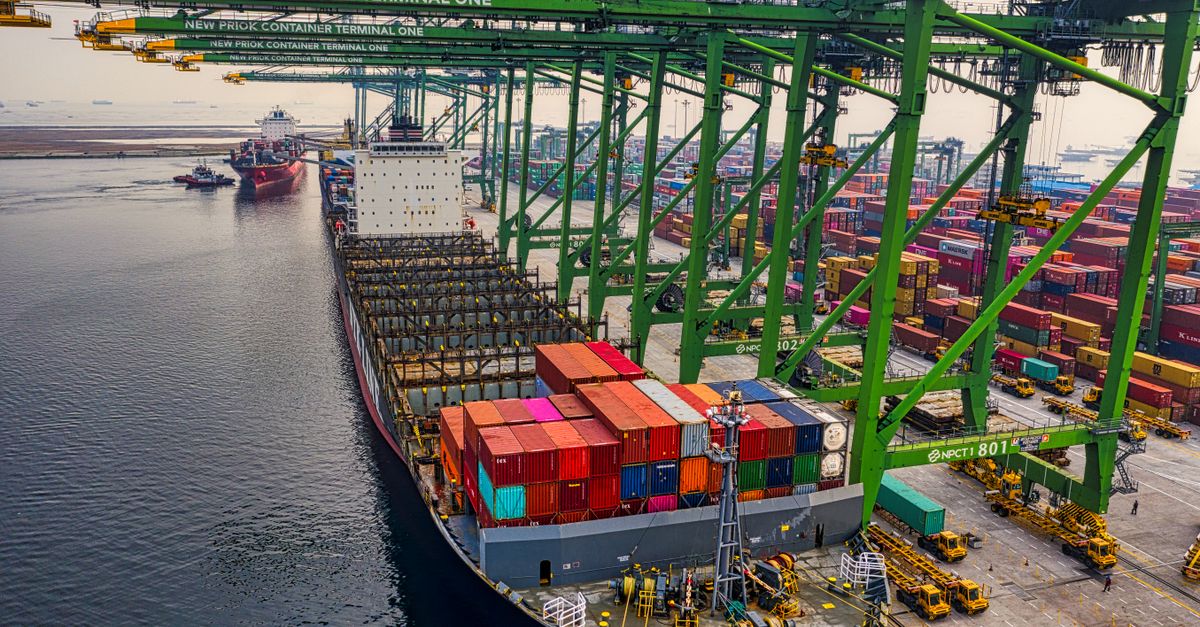

Nigeria earns its foreign exchange primarily from oil exports. In 2014, a barrel of Brent crude sold for approximately $115. By 2016, it had fallen to $30. Nigerian oil exports that previously bought 115 units of worth of imports — industrial equipment, pharmaceuticals, consumer goods — now bought only 30 units. The same physical barrels of oil produced the same quantity of goods; their ability to purchase imports collapsed by 74 percent. This catastrophic shift in what Nigerian exports could buy on world markets is a terms-of-trade deterioration — one of the most damaging economic shocks an export-dependent economy can face.
The formula
Terms of Trade (ToT) = (Export Price Index ÷ Import Price Index) × 100
The export price index measures the average price level of a country's exports relative to a base period; the import price index measures the average price of its imports. The ratio captures how many units of imports a country can obtain for each unit of exports.
If a country's export prices rise while import prices are stable: ToT rises — each unit of exports buys more imports. If export prices fall while import prices rise: ToT falls — each unit of exports buys fewer imports.
The Bureau of Labor Statistics International Price Indexes track U.S. export and import prices monthly, enabling ongoing terms of trade monitoring. The BEA's real trade data adjusts trade volumes for price changes — essential for separating quantity from price effects in trade statistics.
Reading the result
ToT > 100 (versus base period): terms of trade have improved — exports buy more imports than before. Real income equivalent to a favorable price shock.
ToT < 100: terms of trade have deteriorated — exports buy fewer imports. Real income equivalent to an unfavorable price shock, even if export volume is unchanged.
ToT improving over time: countries that export high-value manufactured goods and services (software, pharmaceuticals, aerospace) tend to see relatively stable or improving ToT as quality improvements are captured in prices.
ToT volatile: commodity exporters (oil, minerals, agricultural goods) face high price volatility — the same production volume generates wildly different import purchasing power across commodity cycles.
Worked example
A country exports soybeans and imports machinery. In the base year, soybeans sell at $400/ton and machinery costs $50,000/unit. The country can buy 12.5 tons of machinery per 100 tons of soybeans (500-ton soybean revenue ÷ $50,000 machine cost = 4 machines per 500 tons).
Next year: soybean prices fall to $300/ton while machinery prices rise to $55,000/unit. ToT = (300/400) ÷ (55,000/50,000) × 100 = 0.75 ÷ 1.10 × 100 = 68.2 — a 32 percent deterioration. The same physical soybean exports now buy 32 percent fewer machines.
Where it's used
Terms of trade analysis is essential for understanding developing country economics. The World Bank's commodity price data shows that commodity-dependent economies experience terms of trade volatility that directly translates into fiscal instability, import compression, and growth volatility — the core dynamic behind the "resource curse" and development economists' concerns about commodity dependence.