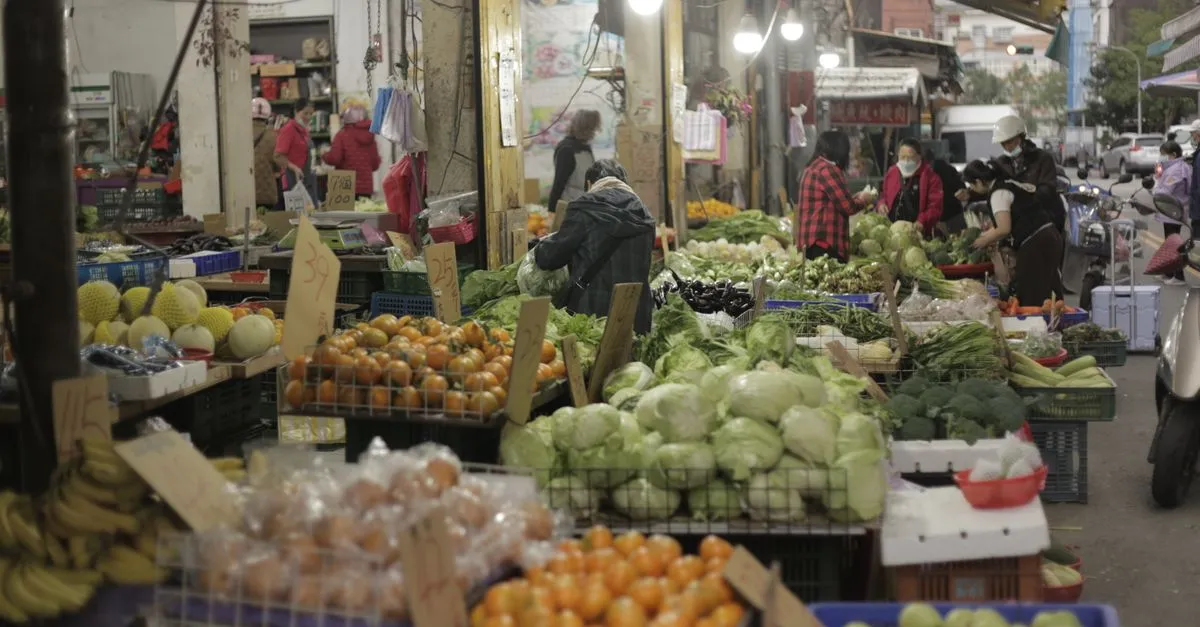

Prices are not just numbers on a tag: they are compressed signals that coordinate millions of independent decisions without any central direction. When a price is free to rise or fall, it simultaneously rations scarce goods, directs investment toward high-value uses, and rewards whoever solves the shortage.
On this page
In the winter of 1973, American drivers sat in lines stretching around city blocks, waiting hours for gasoline that might not be there when they reached the pump. The federal government had capped gasoline prices in response to the OPEC oil embargo, a decision intended to protect consumers from price spikes. What it produced instead was something worse: a price that no longer told suppliers to produce more, no longer told consumers to economize, and no longer directed resources toward their most urgent uses. The signal had been switched off. The lines were what happens when you silence the information system that coordinates an economy.
The mechanism: prices as compressed knowledge
In 1945, the economist Friedrich A. Hayek published what would become one of the most influential short papers in the history of economics. In "The Use of Knowledge in Society"1, published in the American Economic Review, Hayek made a deceptively simple argument: the central problem of economics is not allocating known resources among known ends. It is coordinating the use of knowledge that is inherently dispersed, knowledge that exists in fragments, scattered across millions of people in forms that cannot be centralized.
A farmer in Iowa knows the condition of her soil today. A port worker in Rotterdam knows which container ships are running behind schedule. A refinery manager in Texas knows which processing units are running below capacity. A consumer in Los Angeles knows that he can reduce his driving for the next month without real hardship. None of this knowledge can be collected, processed, and acted upon by any central planning authority fast enough to be useful. But all of it gets encoded, automatically, in real time, into a single number: the price.
When crude oil becomes scarce, the price rises. That single signal simultaneously tells every consumer everywhere to economize, tells every producer that additional output is now profitable, and tells every engineer that new extraction technologies have become commercially viable. No one had to read the Iowa farmer's soil report or call the Rotterdam port. The information reached everyone who needed it through the price.
Three things a price does at once
Rationing. At any given moment, the supply of any good is fixed. A price allocates that fixed supply among competing buyers by sorting them in order of willingness-to-pay: those who value the good most highly (and demonstrate that value with money) get it. During a shortage, a price cap prevents rationing and substitutes lines, lotteries, or political connections. These alternatives do not allocate goods to their highest-value users; they allocate goods to whoever is willing to wait, whoever is lucky, or whoever has the right relationship with the distributor.
Allocation toward highest-value use. Over time, prices direct investment. If the price of a good is high because demand is growing, that high price signals to producers that resources invested in producing this good will be rewarded. Capital, labor, and raw materials flow toward high-price industries and away from low-price ones. This is how an economy, without any director, continuously shifts resources toward their most valued uses as conditions change.
Incentive to innovate. A high price is simultaneously a signal and a reward. The EIA data on oil prices and outlook5 shows this clearly: when crude oil prices exceeded $100 per barrel for most of 2011 to 2014, investment in hydraulic fracturing technology accelerated dramatically, ultimately making the United States the world's largest oil producer. The price signal attracted the capital and entrepreneurial effort that produced the solution. No government directive was needed to identify hydraulic fracturing as a priority; the price told investors where opportunity existed.
Leonard Read's pencil and the limits of central knowledge
In 1958, libertarian economist Leonard Read made Hayek's abstract argument concrete in a short essay called "I, Pencil"2, published by the Foundation for Economic Education. The essay is written from the perspective of a pencil explaining its own origins: the cedar from Oregon forests, the saws used to cut the logs, the steel in the saws, the miners who extracted the iron ore, the rubber eraser from Indonesian rubber trees, the lacquer from castor-oil plants, the graphite mined in Sri Lanka and mixed with clay from Mississippi. No single person on earth knows how to make a pencil from scratch. No central planner could coordinate the worldwide network of labor, materials, and knowledge required. Yet billions of pencils are produced and distributed to consumers each year at negligible cost, because the price system signals to each participant in the supply chain what to contribute and what they will be paid for contributing.
The pencil is an analogy for the entire modern economy. The complexity of the productive apparatus, the global supply chain for any modern good, is so far beyond any individual's comprehension that central direction is not merely inefficient; it is categorically impossible. Prices are the language through which this complexity coordinates itself.
The price-gouging debate as a live test
No episode tests the price-signal theory more directly than the aftermath of a natural disaster. When a hurricane makes landfall, generators, ice, bottled water, and hotel rooms become acutely scarce within hours. The market response, absent any intervention, is for prices on these goods to rise sharply, sometimes by multiples.
The instinct to ban this as "price gouging" is understandable: it looks exploitative for a hardware store to charge $400 for a generator that cost $200 the week before. Forty-nine states have some form of price-gouging law that caps prices during declared emergencies.
But the economic analysis, examined carefully by econlib.org's treatment of the price-gouging debate3, reveals a harder tradeoff. A price cap after a hurricane does three things: it prevents the price from signaling to distant suppliers that it is profitable to rush inventory to the affected area; it prevents the price from rationing scarce supplies toward their highest-value uses; and it prevents the price from incentivizing consumers to conserve. The result is the same as the 1973 gasoline lines, the signal is off, and the shortage persists longer than it otherwise would.
The argument for allowing prices to rise is not that disaster victims should be fleeced. It is that the price rise is precisely what calls in the supply that ends the shortage. When generators in Atlanta suddenly sell for $400, hardware stores in Birmingham load up trucks and drive them to Atlanta. When ice in New Orleans costs five times its normal price after a flood, ice manufacturers in Mississippi run 24-hour shifts and ship south. The high price is both the signal that a shortage exists and the reward for solving it.
This does not mean price-gouging laws produce no benefits: they may reduce the distributional unfairness of disasters and prevent monopolistic exploitation in captive markets. But they carry a real cost: every percentage point the price is suppressed below the market level reduces the urgency of the supply response that actually resolves the shortage.
A real example: the 1973 oil shock and the decade-long response
The OPEC embargo of October 1973 cut off roughly 8 percent of global oil supply. The price signal, where it was allowed to function, was immediate and clear: oil was now worth dramatically more. The historical WTI crude oil price data from the EIA6 shows prices roughly tripling in 12 months. The downstream effect on consumer prices was dramatic: the Bureau of Labor Statistics CPI data8 records that the energy component of the Consumer Price Index rose more than 45 percent between 1973 and 1975, the sharpest two-year energy price surge in the postwar era.
Where prices were allowed to adjust, the response was economically textbook. Automakers invested in smaller, more efficient engines. Consumers bought fuel-efficient Japanese imports in numbers that permanently shifted the U.S. auto market. Congress passed the Corporate Average Fuel Economy (CAFE) standards in 1975. Investment in building insulation, energy-efficient appliances, and alternative energy sources accelerated throughout the late 1970s and 1980s. U.S. energy consumption per dollar of GDP declined continuously for decades afterward, as the EIA's use-of-energy data7 documents.
Where prices were suppressed, through Nixon's price controls on domestic oil, and the allocation regulations that produced gasoline lines, the signal was distorted. Consumers in regions where controlled prices prevailed had no financial incentive to economize. The shortage in controlled markets persisted for years. The decontrolled market, by contrast, directed behavior toward solutions.
When price signals break down
The price-signal framework is powerful but has recognized failure modes.
Externalities are costs or benefits not captured in the market price. When a factory's carbon emissions are not priced, the signal sent to producers and consumers is that energy is cheaper than it truly is, because the social cost of emissions is absent from the calculation. The market overproduces the carbon-intensive good. Corrective taxation (a carbon tax or cap-and-trade system) restores the signal by forcing the external cost back into the price.
Market power distorts the signal. When a monopolist or cartel controls supply, the price reflects a strategic restriction of output rather than true scarcity. OPEC's ability to hold the oil price above competitive levels for extended periods is not a signal that oil is genuinely as scarce as the price implies; it reflects the cartel's exercise of market power. The econlib.org discussion of price controls4 provides historical context for how price distortions by both governments and private monopolists have disrupted market coordination.
Information asymmetries mean buyers and sellers don't have the same knowledge about a good's quality. In markets for used cars, insurance, and professional services, the party with more information can exploit the price signal to their advantage, and the less-informed party may rationally exit the market, preventing mutually beneficial trades from occurring.
These are genuine failures: not arguments that markets are imperfect and therefore central planning should replace them, but arguments that well-designed policy can restore the signal where markets cannot produce it naturally. The price system, even with its failure modes, remains the most efficient information-aggregating mechanism available for coordinating economic activity across the scale of a modern economy. The alternative, attempting to replicate its outputs through central direction, has been tried, and the results are recorded in the history of the twentieth century.
◆ Frequently Asked Questions
What does it mean to say a price 'carries information'?
Why do price controls cause shortages instead of protecting consumers?
Are there situations where price signals fail?
What was the long-run response to the 1973 oil shock, and what drove it?
◆ Sources
- The Use of Knowledge in Society — F.A. Hayek (Library of Economics and Liberty)
- I, Pencil — Leonard E. Read (Library of Economics and Liberty)
- Price Gouging — Library of Economics and Liberty
- Price Controls — Library of Economics and Liberty (Hugh Rockoff)
- Oil and Petroleum Products Prices and Outlook — U.S. Energy Information Administration
- WTI Crude Oil Historical Prices — U.S. Energy Information Administration
- Use of Energy in the United States — U.S. Energy Information Administration
- Consumer Price Index — Bureau of Labor Statistics