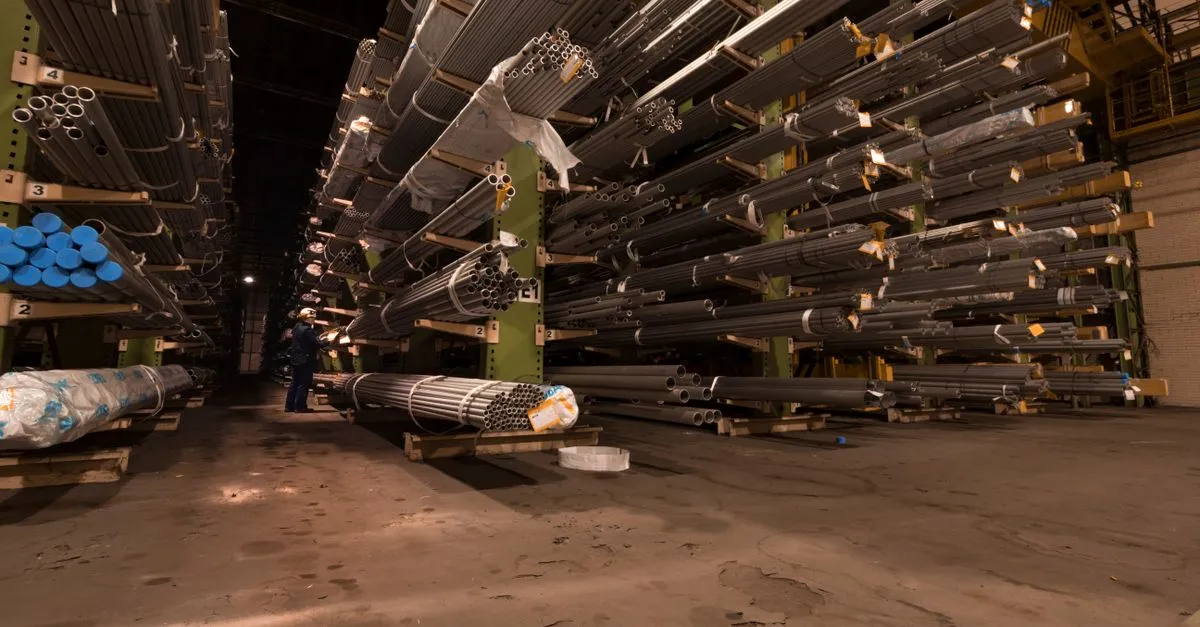

Capital, in economics, means the produced tools and equipment that make each hour of labor more productive: machines, structures, software, and infrastructure. Firms pay for capital based on its marginal product relative to the cost of renting or owning it. Capital accumulation per worker is the single strongest explanation for why wages differ so dramatically between countries.
On this page
A barista pulling espresso shots on a $20,000 commercial machine produces more drinks per hour, at higher quality, than the same person working a single hand-pulled lever. The machine did not make the barista smarter. It made each hour of their labor more productive. That machine is capital, and the gap between what a worker can produce with it and without it is the entire reason capital earns a return.
Capital is one of the four classic factors of production, alongside land, labor, and entrepreneurship. Of the four, it is the only one that human beings deliberately manufacture, and that single fact does more to explain why some economies are rich than almost anything else.
What capital actually is
In everyday speech "capital" means money. In economics it means something more specific: the produced, durable goods that are used to make other goods and services. As the Concise Encyclopedia of Economics describes the broad category of production factors, capital is the stock of equipment, structures, and other manufactured inputs that raise the productivity of labor.1 A delivery van, a CT scanner, a warehouse, a line of code running a payroll system, a power plant: all are capital.
The defining feature is that capital is itself produced. Land is given by nature; labor is supplied by people; but a factory has to be built, and building it means using up resources that could have produced consumer goods instead. This is why economists say capital embodies past saving. To get the espresso machine, someone had to forgo consumption (spend on a machine rather than on dinners out) so that more could be produced later.2
A quick but important distinction: the $20,000 the cafe owner spent is financial capital. The machine that money bought is physical capital (also called real capital). Financial capital is a claim: dollars, stocks, bonds, that can be moved into any use. Physical capital is the actual productive asset. When economists talk about capital as a factor of production, they mean the physical kind. The money matters only because it is the means of acquiring the machine.
How capital gets priced
Capital has two prices, and confusing them is a common mistake.
The first is the purchase price: what you pay to own the asset outright. The espresso machine costs $20,000.
The second is the rental price of capital, sometimes called the user cost. This is what it costs to use one unit of capital for one period: a year, a month, a day. Even an owner who never rents anything still faces a rental price, because tying up $20,000 in a machine means giving up the interest that money could have earned elsewhere, plus the wear and obsolescence the machine suffers each year. The rental price is roughly the interest cost plus the depreciation cost. If money earns 5 percent and the machine loses 10 percent of its value a year, the implicit annual rental price of that $20,000 machine is about $3,000, whether or not a check ever changes hands.
In a competitive market, the rental price gets pushed toward capital's marginal product: the extra output one more unit of capital produces. Firms keep adding machines as long as the next machine produces more value than it costs to rent. They stop where the marginal product of capital equals its rental price. This marginal-productivity logic, developed in the late nineteenth century, is the backbone of how economists explain what each factor of production earns.3 The interest rate sits at the center of this, because it sets the opportunity cost of the funds locked up in any capital good.4
What it looks like in practice
Walk through the cafe owner's decision. The machine costs $20,000. Suppose it lets the shop serve 30 extra drinks a day at a $2 margin each: $60 a day, roughly $18,000 a year in extra gross profit, before counting the cost of the capital itself.
Now price the capital. The owner borrows at 8 percent, so interest runs $1,600 a year. The machine depreciates at 12 percent, or $2,400 a year, as it wears and newer models appear. The total annual user cost of the machine is about $4,000. Against $18,000 of extra margin, the machine clears its rental price several times over, so buying it is the right call. If the extra margin had been only $3,500, the machine would not cover its own user cost and the owner should walk away, even though the shop could technically afford the $20,000.
This is the calculation, scaled up, that drives the trillions of dollars of private fixed investment that flow through the U.S. economy each year, which the Bureau of Economic Analysis tracks as a core component of GDP7 and which the Federal Reserve reports as a national data series.9 Every one of those dollars represents a firm somewhere deciding that an asset's marginal product beats its user cost.
Why this reaches wages
Here is the part that matters far beyond any single cafe. The amount of capital per worker is the single biggest reason a worker in one country earns ten or twenty times what an equally capable worker earns in another.
Give a ditch-digger a shovel and they move a few cubic yards a day. Give them an excavator and they move hundreds. The worker is the same; the capital is not. Because more capital per worker raises the marginal product of labor, and because competitive labor markets push wages toward that marginal product, capital accumulation is the deep engine of rising real wages over the long run.5 Productivity (output per hour worked) rises largely because each hour is paired with more and better tools, a relationship the Bureau of Labor Statistics measures directly in its productivity statistics.6
This is why economic development is so heavily a story about investment. A country that consistently saves and invests builds a deeper capital stock per worker, raises productivity, and pays higher wages. A country that consumes everything it produces stays poor, no matter how hard its people work.
The catch: capital wears out
There is a sobering footnote to all of this. Capital is not permanent. It depreciates: physically wearing down and economically going obsolete. A laptop is nearly worthless in six years; a delivery truck rusts; a software system gets superseded.
That means a large share of every economy's investment is not adding new capital at all: it is just replacing the capital that is breaking down. When economists distinguish gross investment (everything spent on capital goods) from net investment (the part that actually expands the stock), the difference is depreciation, which the national accounts treat as a real cost of production.8 An economy that invests just enough to cover depreciation is running in place. Only net investment, building faster than the existing stock wears out, makes workers more productive over time.
A common mix-up
The most frequent confusion is treating capital and money as the same thing. They are not. Money is a medium of exchange and a store of value; it is a claim on resources, not a resource that produces anything on its own. A vault of cash bakes no bread and drills no wells. Capital is the bread-making oven and the drill: the produced tools that, combined with labor, actually generate output.
The link between them is that money is how a society directs resources toward building capital. Savings flow through banks and markets to firms that convert them into machines and structures. So when you save and invest, you are not just storing money: you are, indirectly, financing the next excavator, the next fabrication plant, the next line of productive code. That is the quiet, compounding mechanism behind a richer economy and, eventually, a higher paycheck.
◆ Frequently Asked Questions
What is the difference between financial capital and physical capital?
Why does capital earn a return?
What is the difference between gross investment and net investment?
◆ Sources
- Distribution of Income - Concise Encyclopedia of Economics, Library of Economics and Liberty
- Saving - Concise Encyclopedia of Economics, Library of Economics and Liberty
- Marginalism - Concise Encyclopedia of Economics, Library of Economics and Liberty
- Interest - Concise Encyclopedia of Economics, Library of Economics and Liberty
- Economic Growth - Concise Encyclopedia of Economics, Library of Economics and Liberty
- Productivity - Concise Encyclopedia of Economics, Library of Economics and Liberty
- Gross Domestic Product - Bureau of Economic Analysis
- National Economic Accounts - Bureau of Economic Analysis
- Gross Private Domestic Investment - FRED, Federal Reserve Bank of St. Louis