
Skip to content
Scypion Finance
  • Articles
  • The Library
  • Glossary
  • Tools
  • Military
  • Videos
/
Scypion Finance

Data over opinion. Evidence over emotion.

YT𝕏∿

About

  • Company
  • Leadership
  • Contact
  • Editorial Standards

Legal

  • Terms of Use
  • Privacy Policy
  • Cookie Policy
  • Disclaimer

Scypion Finance is for educational and informational purposes only and is not financial, investment, tax, or legal advice. Reading this site does not create an advisory relationship. Markets carry risk; consult a licensed professional before acting on anything you read here.

Accessibility
© 2026 Scypion Finance. Founded by Erajah Scypion.Your money, and the forces that move it.

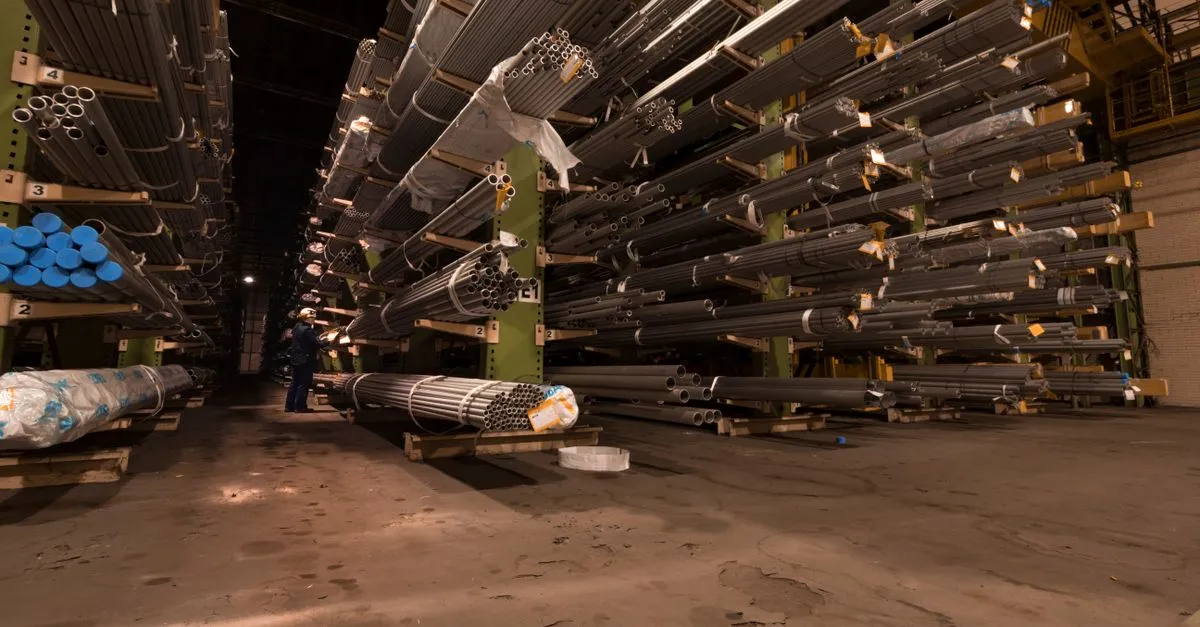
Photo by Subbu Rayan on Pexels

Home›The Economy›Firms & Markets›Factor Markets

Physical vs. Financial Capital: Two Things Called "Capital" That Aren't the Same

Erajah Scypion
Erajah ScypionFounder, Scypion Finance
5 sources3 min readPublished April 12, 2026
◆ Key Takeaways
  • Physical capital is the stock of produced goods used as inputs in further production — machinery, buildings, vehicles, computers, and infrastructure
  • Financial capital is money or financial claims used to acquire physical capital — stocks, bonds, loans, and retained earnings
  • In economics, 'capital' usually means physical capital; in finance, 'capital' usually means financial capital
  • Physical capital investment is funded by financial capital; the return to physical capital (its marginal product) determines the return financial investors earn in equilibrium
On this page
  • The quick distinction
  • Physical capital, explained
  • Financial capital, explained
  • How to keep them straight

When a logistics company says it needs capital to expand its fleet, it means money — financial capital — to purchase more trucks. When an economist analyzes the capital inputs in the transportation sector, they mean the trucks themselves — physical capital — as factors of production. Both uses of 'capital' are correct in context, but they describe different things, and confusing them produces fundamental errors in economic analysis. The financial capital funds the physical capital investment; the physical capital produces economic value; the physical capital's productivity determines what financial investors earn.

The quick distinction

Physical capital (also called productive capital or real capital) is the stock of manufactured goods used as inputs in production:

  • Machinery and equipment (assembly lines, computers, medical devices)
  • Buildings and structures (factories, warehouses, offices)
  • Infrastructure (transportation networks, communication systems, energy grids)
  • Working inventory (raw materials and intermediate goods awaiting processing)

Physical capital is an input in the production function alongside land and labor. Its productive value comes from the stream of output it helps create over its useful life.

Financial capital is the pool of funds available to invest in physical capital:

  • Equity capital (stock issued by firms)
  • Debt capital (bonds, bank loans)
  • Retained earnings (profits reinvested by firms)
  • Venture capital, private equity, and government investment funds

Financial capital funds the acquisition of physical capital — it has no direct productive value itself. A dollar of financial capital invested in a productive factory generates value; a dollar of financial capital sitting in a checking account generates only its financial return.

Physical capital Financial capital
What it is Produced productive inputs Money or financial claims
Creates value by Being used in production Funding physical capital acquisition
Measured in Units (trucks, buildings) Dollars (market value, book value)
Return Marginal product of capital Interest, dividends, capital gains

Physical capital, explained

The Bureau of Economic Analysis Fixed Assets accounts track the U.S. physical capital stock — currently valued at approximately $60–70 trillion when including residential and non-residential structures, equipment, and intellectual property. Investment in new physical capital (measured in the BEA's National Accounts as Gross Private Domestic Investment) adds to this stock; depreciation reduces it. Net capital formation — investment minus depreciation — determines whether the productive capacity of the economy is growing.

Financial capital, explained

Financial capital allocation is tracked through the Federal Reserve's Flow of Funds (Z.1) accounts, which show how saving flows from households through financial intermediaries into business investment — the chain that connects financial capital to physical capital accumulation. Interest rates coordinate this flow: higher rates raise the cost of financial capital, reducing investment in physical capital; lower rates do the reverse.

How to keep them straight

In economic production analysis: capital = physical inputs used to make output. In financial markets: capital = money and claims used to fund investment. The two are connected by the investment process — financial capital is the input, physical capital is the output of that process — but they are distinct concepts measured differently and analyzed with different tools.


◆ THE GUIDEThe Best Economics Books for Non-EconomistsThe best economics books for people who never took the class — accessible guides from Wheelan and Sowell, plus Freakonomics and the source texts from Smith and Friedman.See our picks →

◆ Sources

  1. Fixed Assets and Consumer Durable Goods — Bureau of Economic Analysis
  2. Financial Accounts of the United States (Z.1) — Federal Reserve
  3. Physical Capital — Investopedia
  4. Capital — Library of Economics and Liberty
  5. National Income and Product Accounts — Bureau of Economic Analysis
On this page
  • The quick distinction
  • Physical capital, explained
  • Financial capital, explained
  • How to keep them straight
◆ Related reading
  • Land and Economic Rent: Why Location Commands a Price Nobody Earned
  • Present Value: What Future Money Is Worth Today
  • The Rental Price of Capital: How Interest Rates Decide What Gets Built
  • Should the Government Redistribute Income? The Economics of Taxes, Transfers, and Trade-Offs
All Factor Markets →
◆ SHARE
Erajah Scypion
Erajah Scypion
Founder, Scypion Finance

I got interested in economics the hard way, by not understanding what was happening around me. I'd read an explanation, nod along, and walk away knowing no more than when I started. After enough of that, I stopped looking for the resource I wanted and started writing it. My background isn't Wall Street. I've spent the last eleven years in the U.S. Navy, and that's where I learned the thing this whole site runs on: Any system — a battalion, a budget, an economy — can be understood if someone walks you through it one step at a time. The Navy also gave me the three words I hold the work to: honor, courage, commitment. Here they mean every claim traces back to a source you can check yourself, the clear explanation gets chosen over the easy one, and the reader comes before anyone paying the bills. Scypion Finance is where that work gets published: sourced explanations of money and the economy, written to be understood. Start wherever your question is.

View full profile →

More in Factor Markets

All Factor Markets →
◆ FACTOR MARKETS

Profit as the Return to Risk: What Economic Profit Really Measures

Economic profit subtracts opportunity cost - including what your money and time could have earned elsewhere. Here is why it differs from accounting profit.

6 min read
Read →
◆ FACTOR MARKETS

Profit, Uncertainty, and Why Entrepreneurs Earn What They Earn

Schumpeter saw the entrepreneur as capitalism's engine. Knight explained why they earn profit. Together they answer what economics struggled with for a century.

7 min read
Read →
◆ FACTOR MARKETS

Economic Rent: Income That Exceeds What It Takes to Keep a Resource in Use

Economic rent is the payment to a factor of production above what is needed to keep it in its current use.

3 min read
Read →
◆ FACTOR MARKETS

Capital as a Factor of Production: What It Is, How It's Priced, and Why It Matters

Capital is the produced means of production - tools, machines, buildings. Here is what counts as capital, how its rental price is set, and why it drives wages.

7 min read
Read →

◆ THE NEWSLETTER

Money, made clear

Personal finance and the economy, broken down: numbers shown, every claim sourced.

Only when it's worth your time. No spam, unsubscribe anytime.