
Skip to content
Scypion Finance
  • Articles
  • The Library
  • Glossary
  • Tools
  • Military
  • Videos
/
Scypion Finance

Data over opinion. Evidence over emotion.

YT𝕏∿

About

  • Company
  • Leadership
  • Contact
  • Editorial Standards

Legal

  • Terms of Use
  • Privacy Policy
  • Cookie Policy
  • Disclaimer

Scypion Finance is for educational and informational purposes only and is not financial, investment, tax, or legal advice. Reading this site does not create an advisory relationship. Markets carry risk; consult a licensed professional before acting on anything you read here.

Accessibility
© 2026 Scypion Finance. Founded by Erajah Scypion.Your money, and the forces that move it.

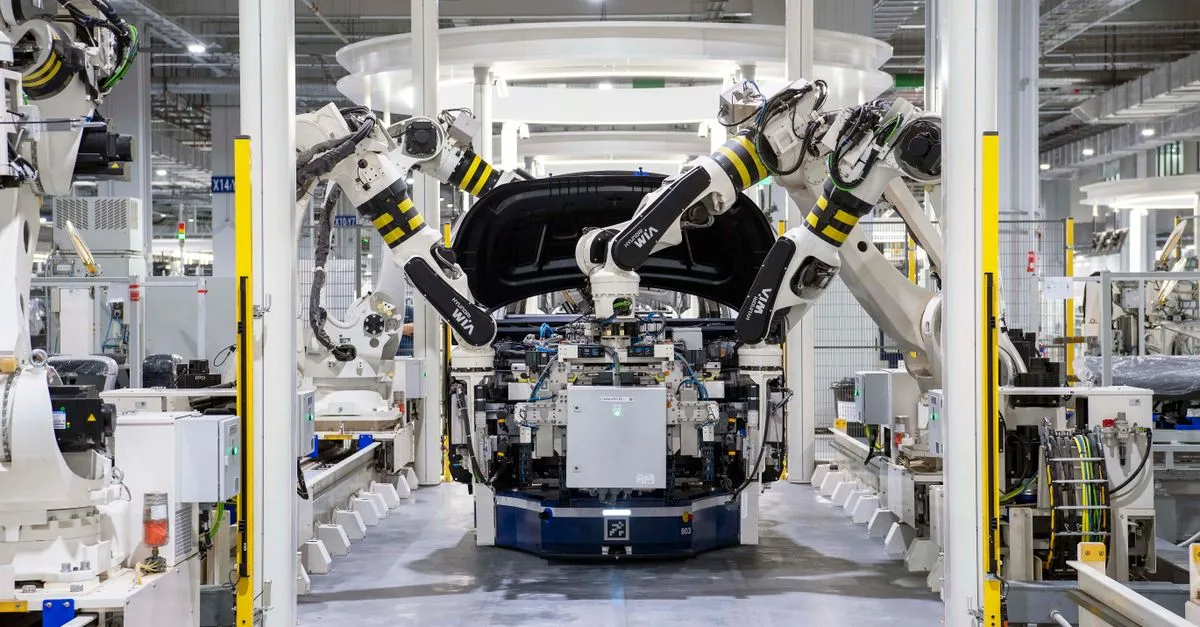
Photo by Mikhail Nilov on Pexels

Home›The Economy›Firms & Markets›The Firm & Production

Economies of Scale: Why Getting Bigger Sometimes Means Getting Cheaper

Erajah Scypion
Erajah ScypionFounder, Scypion Finance
5 sources3 min readPublished March 1, 2026
◆ Key Takeaways
  • Economies of scale exist when long-run average cost (LRAC) falls as output increases — larger production is more efficient
  • Sources include fixed cost spreading, specialization, bulk purchasing power, and technological efficiency at scale
  • The minimum efficient scale (MES) is the output level at which LRAC reaches its minimum — the efficient size for a firm in that industry
  • Diseconomies of scale arise when LRAC rises with output — management complexity, coordination costs, and bureaucracy grow faster than the efficiency gains
On this page
  • The setup
  • What happens — and why
  • Where you see it in the wild
  • Why it matters

Amazon's fulfillment network processes millions of packages per day through robotics, algorithmic routing, and optimized warehouse layouts. A regional e-commerce competitor processing thousands of packages per day cannot spread the fixed cost of that infrastructure across enough orders to match Amazon's per-unit fulfillment cost. This cost gap — the difference in average cost between the giant and the small — is economies of scale, and it is one of the primary forces driving market concentration in logistics, manufacturing, and platform industries.

The setup

Economies of scale occur in the long run when a firm's long-run average cost (LRAC) falls as output increases. As the firm doubles its size, total cost less than doubles — average cost falls.

Four main sources:

Fixed cost spreading: administrative overhead, R&D, branding, and regulatory compliance costs are largely fixed. Spreading them over more units reduces the per-unit contribution from each source.

Input specialization: larger operations allow workers to specialize more narrowly and machines to run closer to full capacity, improving efficiency.

Purchasing power: large buyers negotiate lower input prices — a retailer ordering 10 million units gets better pricing than one ordering 10,000.

Technological efficiency: some production processes — continuous casting in steel, semiconductor fabrication — have minimum efficient scales well above what small firms can reach. Only large producers can access the full efficiency of the technology.

What happens — and why

The LRAC curve is the envelope of all the short-run ATC curves — one for each possible plant size. In the region of economies of scale, the LRAC is declining. At the minimum efficient scale (MES), LRAC reaches its minimum — the most cost-efficient production level. Beyond MES, LRAC is flat (constant returns) or rising (diseconomies).

Diseconomies of scale arise when LRAC rises with output. Large organizations face rising management costs, slower decision-making, coordination complexity, and principal-agent problems that erode efficiency gains. The Bureau of Labor Statistics business formation data shows that in most service industries, average firm size stabilizes well below the size of industrial producers — suggesting diseconomies of scale set in at moderate output levels in labor-intensive services.

Where you see it in the wild

The Bureau of Economic Analysis industry concentration data shows the capital-intensive industries where economies of scale are strongest: petroleum refining, semiconductor manufacturing, commercial aircraft, and electricity generation. Each requires multi-billion-dollar investments that only become efficient at very large output scales — which is why each industry has only a few globally competitive producers.

Why it matters

Economies of scale determine competitive market structure. Where they are strong, markets consolidate toward a few large producers (airlines, semiconductors, utilities). Where they are weak or diseconomies set in quickly, many small firms coexist (restaurants, professional services, retail). Antitrust regulators evaluate merger proposals by asking whether the merged entity will achieve cost efficiencies that justify the reduction in competitive pressure — a direct application of scale economy analysis.


◆ THE GUIDEThe Best Economics Books for Non-EconomistsThe best economics books for people who never took the class — accessible guides from Wheelan and Sowell, plus Freakonomics and the source texts from Smith and Friedman.See our picks →

◆ Sources

  1. Business Employment Dynamics — Bureau of Labor Statistics
  2. Industry Economic Accounts — Bureau of Economic Analysis
  3. FTC Economics Policy — Federal Trade Commission
  4. Economies of Scale — Investopedia
  5. Natural Monopoly — Library of Economics and Liberty
On this page
  • The setup
  • What happens — and why
  • Where you see it in the wild
  • Why it matters
◆ Related reading
  • Average Cost vs. Marginal Cost: The Two Numbers That Drive Every Output Decision
  • The U-Shaped Cost Curve: Two Forces Every Business Runs Between
  • Long-Run Equilibrium: Where Competition Eventually Takes Every Market
  • Factors of Production: The Four Inputs Behind Everything Made
All The Firm & Production →
◆ SHARE
Erajah Scypion
Erajah Scypion
Founder, Scypion Finance

I got interested in economics the hard way, by not understanding what was happening around me. I'd read an explanation, nod along, and walk away knowing no more than when I started. After enough of that, I stopped looking for the resource I wanted and started writing it. My background isn't Wall Street. I've spent the last eleven years in the U.S. Navy, and that's where I learned the thing this whole site runs on: Any system — a battalion, a budget, an economy — can be understood if someone walks you through it one step at a time. The Navy also gave me the three words I hold the work to: honor, courage, commitment. Here they mean every claim traces back to a source you can check yourself, the clear explanation gets chosen over the easy one, and the reader comes before anyone paying the bills. Scypion Finance is where that work gets published: sourced explanations of money and the economy, written to be understood. Start wherever your question is.

View full profile →

More in The Firm & Production

All The Firm & Production →
◆ THE FIRM & PRODUCTION

Sunk Cost: Why Past Spending Shouldn't Drive Future Decisions

A sunk cost is a cost already incurred that cannot be recovered. Rational decision-making ignores sunk costs — only future costs and benefits are relevant to…

3 min read
Read →
◆ THE FIRM & PRODUCTION

Average Total Cost: The Cost Per Unit That Determines Profitability

Average total cost (ATC) is total cost divided by quantity produced — the cost per unit of output.

3 min read
Read →
◆ THE FIRM & PRODUCTION

Explicit vs. Implicit Costs: The Full Picture of What a Business Really Costs

Explicit costs are the cash payments a firm makes; implicit costs are the opportunity costs of resources the firm owns.

3 min read
Read →
◆ THE FIRM & PRODUCTION

The Law of Diminishing Returns: Why Adding More Eventually Produces Less

The law of diminishing returns states that adding more of one input to a fixed set of other inputs will eventually yield smaller and smaller increases in…

3 min read
Read →

◆ THE NEWSLETTER

Money, made clear

Personal finance and the economy, broken down: numbers shown, every claim sourced.

Only when it's worth your time. No spam, unsubscribe anytime.