Skip to content
Scypion Finance
  • Articles
  • The Library
  • Glossary
  • Tools
  • Military
  • Videos
/
Scypion Finance

Data over opinion. Evidence over emotion.

YT𝕏∿

About

  • Company
  • Leadership
  • Contact
  • Editorial Standards

Legal

  • Terms of Use
  • Privacy Policy
  • Cookie Policy
  • Disclaimer

Scypion Finance is for educational and informational purposes only and is not financial, investment, tax, or legal advice. Reading this site does not create an advisory relationship. Markets carry risk; consult a licensed professional before acting on anything you read here.

Accessibility
© 2026 Scypion Finance. Founded by Erajah Scypion.Your money, and the forces that move it.
Home›The Economy›Firms & Markets›The Firm & Production
◆ FIRMS & MARKETS

The Firm & Production

Production functions, the short and long run, cost curves, and economies of scale.

25 articles

Featured

Long-Run Equilibrium: Where Competition Eventually Takes Every Market

Long-run equilibrium is the state a competitive market reaches after all entry and exit adjustments are complete.

Read more →

Deep Dives

9 articles
◆ THE FIRM & PRODUCTION

The Tenth Cook Changes Nothing: How Production Functions Explain Every Output Limit You'll Ever Hit

A production function maps inputs to maximum output. It explains why the tenth worker adds less than the first and where real productivity growth comes from.

7 min read·March 17, 2026
Read →
◆ THE FIRM & PRODUCTION

Marginal Product of Labor: The Number Behind Every Hiring Decision

One more worker, one real number: learn how marginal product of labor tells a firm exactly when to hire, when to stop, and what a worker is actually worth.

7 min read·March 18, 2026
Read →
◆ THE FIRM & PRODUCTION

Short Run, Long Run: Why the Same Firm Acts Completely Differently Over Time

One question unlocks how any firm responds to a demand shock: which inputs can it actually change right now? The answer is never the same twice.

8 min read·March 20, 2026
Read →
◆ THE FIRM & PRODUCTION

Returns to Scale: What Happens When You Double Everything in a Production Process

Double every input — does output double, more than double, or less? Returns to scale answers that, and it explains why some industries have giants and others…

7 min read·March 21, 2026
Read →
◆ THE FIRM & PRODUCTION

Fixed Costs, Variable Costs, and Why the Split Runs the Whole Show

Fixed costs don't move with output; variable costs do. That one split explains pricing, break-even, and why bigger runs cost less per unit.

7 min read·March 22, 2026
Read →
◆ THE FIRM & PRODUCTION

Average Cost vs. Marginal Cost: The Two Numbers That Drive Every Output Decision

Average cost tells you how the business is doing. Marginal cost tells you what to do next. Confuse them and you leave real money on the table.

7 min read·March 23, 2026
Read →
◆ THE FIRM & PRODUCTION

The U-Shaped Cost Curve: Two Forces Every Business Runs Between

Per-unit cost falls to a trough, then climbs again. That U isn't a textbook convention; it's two real forces taking turns running the show.

7 min read·March 24, 2026
Read →
◆ THE FIRM & PRODUCTION

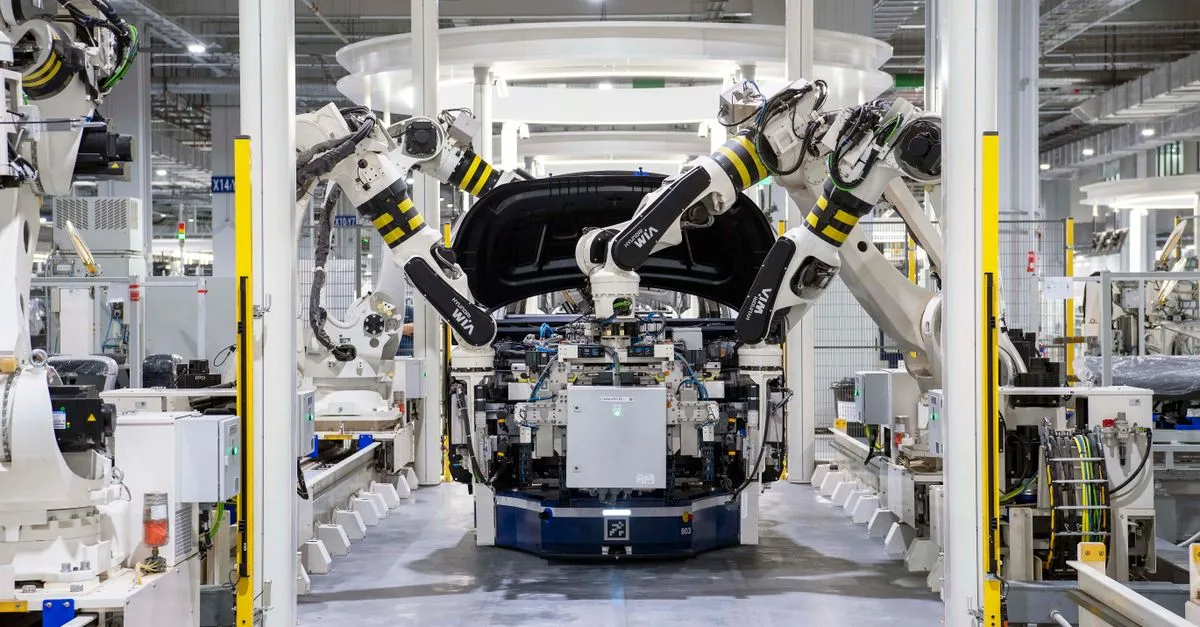
What Happens When a Company Doubles in Size? Economies and Diseconomies of Scale

Growing bigger can make every unit cheaper — until it doesn't. Economies of scale pull costs down as a firm expands; diseconomies push them back up.
7 min read·March 25, 2026
Read →
◆ THE FIRM & PRODUCTION

The Money You've Already Spent Has Nothing to Do With Your Next Decision

Sunk costs are gone regardless of what you choose next. Here is why they keep driving decisions anyway, and the one question that fixes it.

7 min read·March 27, 2026
Read →
◆ THE BROADSHEETThe terms behind the headlines, and where to read next.

Key terms

  • Factors of Production: The Four Inputs Behind Everything MadeFactors of production are the inputs used to create goods and services: land, labor, capital, and entrepreneurship.
  • The Law of Diminishing Returns: Why Adding More Eventually Produces LessThe law of diminishing returns states that adding more of one input to a fixed set of other inputs will eventually yield smaller and smaller increases in…
  • Sunk Cost: Why Past Spending Shouldn't Drive Future DecisionsA sunk cost is a cost already incurred that cannot be recovered. Rational decision-making ignores sunk costs — only future costs and benefits are relevant to…
  • Explicit vs. Implicit Costs: The Full Picture of What a Business Really CostsExplicit costs are the cash payments a firm makes; implicit costs are the opportunity costs of resources the firm owns.
  • The Profit-Maximization Rule: Why Every Firm Targets MR = MCThe profit-maximization rule states that firms maximize profit by producing where marginal revenue equals marginal cost.
  • Marginal Cost: The Only Cost That Matters for the Next DecisionMarginal cost is the additional cost of producing one more unit of output. It is the cost variable that drives every output, pricing, and hiring decision at…
  • Marginal and Average Product: How Much Does One More Worker Add?Marginal product is the additional output from one more unit of an input. Average product is output per unit of input.
  • Marginal Revenue Product: What One More Worker Is Actually WorthThe marginal revenue product of labor is the additional revenue generated by hiring one more worker.
  • What Is a Firm? The Economic Unit That Turns Inputs Into OutputA firm is an organization that buys inputs, transforms them into output, and sells the result.
  • The Short Run vs. Long Run: The Most Important Time Distinction in EconomicsThe short run is the period when at least one input is fixed. The long run is when all inputs are variable.
  • Fixed vs. Variable Costs: How Cost Structure Shapes Business DecisionsFixed costs don't change with output; variable costs do. The ratio between them determines a firm's operating leverage, its break-even point, and how it…
  • Marginal Revenue: The Revenue From One More SaleMarginal revenue is the additional revenue earned from selling one more unit of output. Its relationship with price determines the firm's market power and its…
  • Economies of Scale: Why Getting Bigger Sometimes Means Getting CheaperEconomies of scale occur when long-run average cost falls as output increases. They are the economic engine of industrial concentration — and when they're…
  • Economic Profit: The Real Test of Whether a Business Is Creating ValueEconomic profit subtracts all costs — including implicit opportunity costs — from revenue. Zero economic profit is not failure; it means the business is…
  • Average Total Cost: The Cost Per Unit That Determines ProfitabilityAverage total cost (ATC) is total cost divided by quantity produced — the cost per unit of output.

More in Firms & Markets

  • Competition & Monopoly22
  • Imperfect Competition14
  • Labor Economics12
  • Factor Markets8
All of Firms & Markets →

◆ THE NEWSLETTER

Money, made clear

Personal finance and the economy, broken down: numbers shown, every claim sourced.

Only when it's worth your time. No spam, unsubscribe anytime.