
The prisoner's dilemma is a game-theory structure where two parties each have a dominant incentive to defect, even though mutual cooperation would leave both better off. It explains price wars, advertising arms races, and cartel instability. The way out is repetition, credible retaliation, or redesigning the payoffs so defection stops paying.
On this page
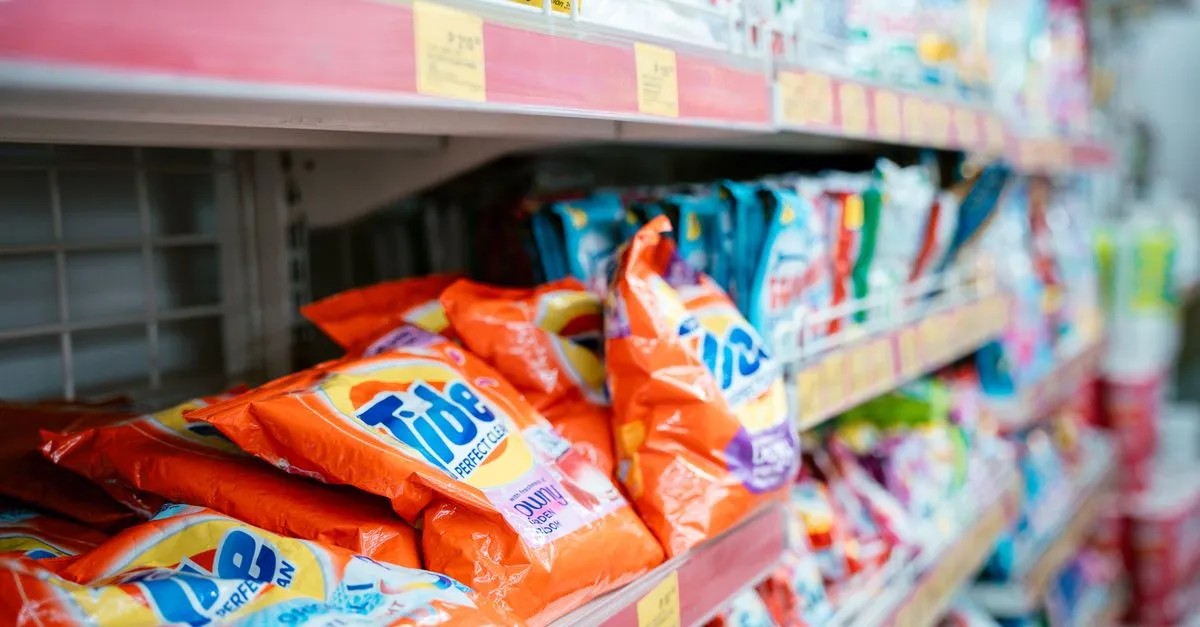
Picture two competing gas stations on opposite corners of the same intersection. Both are selling regular at $3.50 a gallon and both are comfortably profitable. One morning the owner of the first station does the math: if I drop my price to $3.40 while my rival holds at $3.50, drivers will cross the street and my volume will jump. So she cuts. By noon the rival has matched, because he faced the identical math. Now both sell at $3.40, both have roughly the same customers they started with, and both earn less per gallon. Each made the smart individual move. Together they made themselves poorer.
That is the prisoner's dilemma, arguably the single most important idea in game theory, and the engine behind price wars, advertising arms races, and the chronic instability of cartels.
The setup that names it
The scenario behind the name involves two suspects arrested for a crime and held in separate rooms. Each is offered the same deal: confess and implicate your partner, and you go easy while they take the fall. The Library of Economics and Liberty walks through the original framing in precise detail1: if both stay silent, each gets a light sentence; if both confess, each gets a heavy one; if one confesses while the other stays silent, the confessor walks and the silent one is hammered.
The cruel structure is that no matter what the other prisoner does, each individual is better off confessing. So both confess, and both end up with the heavy sentence they could have avoided by trusting each other. Individually rational, collectively disastrous.
The idea in plain words
Strip away the prison story and the dilemma is a general structure: two players, each choosing between cooperate and defect, where defecting is the dominant strategy for each (the best move regardless of what the other side picks), yet mutual cooperation would have left both better off than mutual defection.
The word dominant is carrying the weight here. A dominant strategy is one you should play no matter what the other side does. When both players have a dominant strategy to defect, the outcome is locked in: both defect, both lose, and neither can do anything about it unilaterally without making themselves worse off.
Walk through the payoff matrix
Let's return to the two gas stations and put numbers on it. Each station chooses to hold its price High at $3.50 or cut it Low to $3.40. The cells show daily profit for Station A and Station B:
| B holds High | B cuts Low | |
|---|---|---|
| A holds High | A $1,000 / B $1,000 | A $400 / B $1,300 |
| A cuts Low | A $1,300 / B $400 | A $700 / B $700 |
Now reason through it from Station A's chair. If B holds High, A earns $1,000 by holding but $1,300 by cutting. Cutting wins. If B cuts Low, A earns $400 by holding but $700 by cutting. Cutting wins again. Cutting is better for A no matter what B does. By the symmetry of the table, cutting is B's dominant strategy too. So both cut, and the market lands in the bottom-right cell at $700 each.
Look at what they gave up. The top-left cell, where both hold High, paid each station $1,000. Mutual cooperation was worth $300 a day more to each of them than the outcome they rationally reached. They are trapped in the worse cell precisely because each, acting sensibly, chose the move that undercut their joint interest. No one was irrational. No one made a mistake. The structure did the damage.
Why this is the skeleton inside price wars and cartels
This matrix is the hidden shape behind an enormous range of business situations. Any time a group of rivals would all be better off restraining themselves (keeping prices high, advertising lightly, holding output down) but each gains by breaking ranks individually, you are looking at a prisoner's dilemma.
It is exactly why cartels are unstable. A cartel is an agreement to sit together in the top-left cell, all holding High and splitting the fat profits. But every member is staring at the bottom-left or top-right cell, where defecting alone pays $1,300 instead of $1,000. The same incentive that makes the agreement attractive makes it fragile: each member is privately tempted to cheat, and if enough do, the whole arrangement collapses into mutual defection. The Department of Justice prosecutes the explicit version of this agreement as criminal price-fixing2, but even without prosecution, the internal math tends to tear cartels apart. The Stanford Encyclopedia of Philosophy frames the general problem precisely: when each player can always improve their own payoff by defecting, no binding agreement can hold without external enforcement3.
Change one thing: repeat the game
The dilemma's grip loosens dramatically when the game is played over and over rather than once. Our gas stations do not interact a single time; they face each other every day, indefinitely. That repetition introduces a future, and the future can be used to enforce cooperation.
Suppose Station A adopts a simple rule: hold High as long as you hold High, and cut the day you cut. This is the tit-for-tat strategy, and it changes B's calculation entirely. Defecting today still grabs a one-day gain of $300, but it triggers a price war that costs B $300 every day thereafter. As long as B values future profits enough, the one-time gain is not worth the lasting punishment. Cooperation becomes self-sustaining, not from goodwill, but from the credible threat of retaliation.
This is why repeated interaction is the most powerful antidote to the dilemma. The Library of Economics and Liberty identifies repetition as the central reason real-world rivals sustain cooperation that one-shot logic says is impossible4. It is also why tacit price coordination among a stable set of competitors worries antitrust regulators: firms that meet in the same market year after year can converge on high prices without ever signing an agreement, simply by each understanding that cutting price invites a war nobody wants.
The intellectual weight behind this
The mathematician John Nash formalized exactly the kind of outcome the gas stations reached: a point where no player can do better by changing their strategy alone, given what everyone else is doing. That concept, now called the Nash equilibrium, earned Nash a share of the 1994 Nobel Prize in economic sciences5.
The dilemma is not a curiosity: it is one of the load-bearing ideas in the modern theory of competition.
The prisoner's dilemma is not an edge case. The game-theory framework built around it has since been applied to nuclear deterrence, environmental agreements, and wage negotiations, wherever two parties would gain from cooperation but each faces a private temptation to defect. A reader who wants to see the full formal treatment, including how equilibrium behavior changes when players have different discount rates for future payoffs, can find it in the foundational work published in the Journal of Economic Theory6.
What this teaches you about markets
The practical lesson runs in two directions. If you are watching a market full of rivals locked in a destructive price war, the prisoner's dilemma tells you why, and it tells you that calls to "be reasonable" will fail, because the players are already being reasonable. The way out runs through the structure: change the payoffs, lengthen the relationship, or make commitments credible.
And if you are ever invited into a cooperative arrangement that depends on everyone resisting a private temptation to cheat, the dilemma is your warning that the arrangement is fragile by construction. Ask what enforces cooperation, because without enforcement, the matrix wins every time. The smart move is not optimism about human nature. It is designing the game so defection stops paying.
◆ Frequently Asked Questions
What makes defection a 'dominant strategy' in a prisoner's dilemma?
Why are cartels so unstable if cooperation would make everyone richer?
How does repeating the game change the outcome?
What was the Nash equilibrium concept, and why did it win a Nobel Prize?
◆ Sources
- Prisoners' Dilemma — Avinash Dixit and Barry Nalebuff, Concise Encyclopedia of Economics, Library of Economics and Liberty
- Price Fixing, Bid Rigging, and Market Allocation Schemes — U.S. Department of Justice, Antitrust Division
- Prisoner's Dilemma — Stanford Encyclopedia of Philosophy
- Game Theory — Avinash Dixit and Barry Nalebuff, Concise Encyclopedia of Economics, Library of Economics and Liberty
- The Prize in Economic Sciences 1994 — Summary, Nobel Prize
- The Folk Theorem in Repeated Games with Discounting or with Incomplete Information — Drew Fudenberg and Jean Tirole, Journal of Economic Theory